

IndonesianTalk.com — IKPNI Screens “12 Mile: Guiding The Archipelago,” Revisiting Mochtar Kusumaatmadja’s Maritime Diplomacy
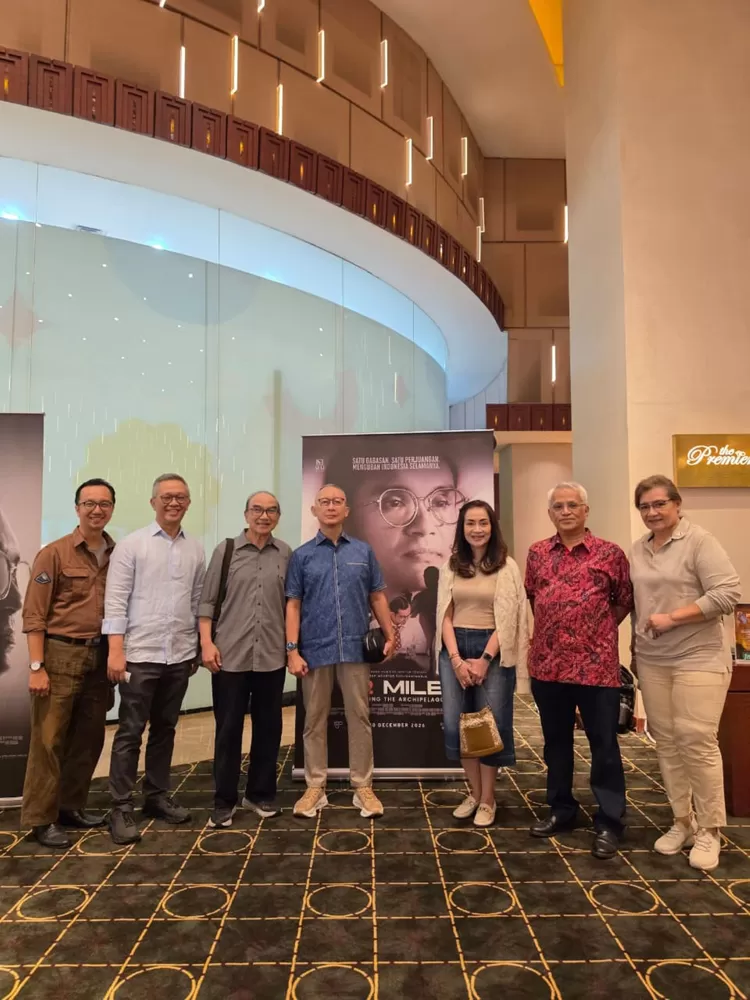
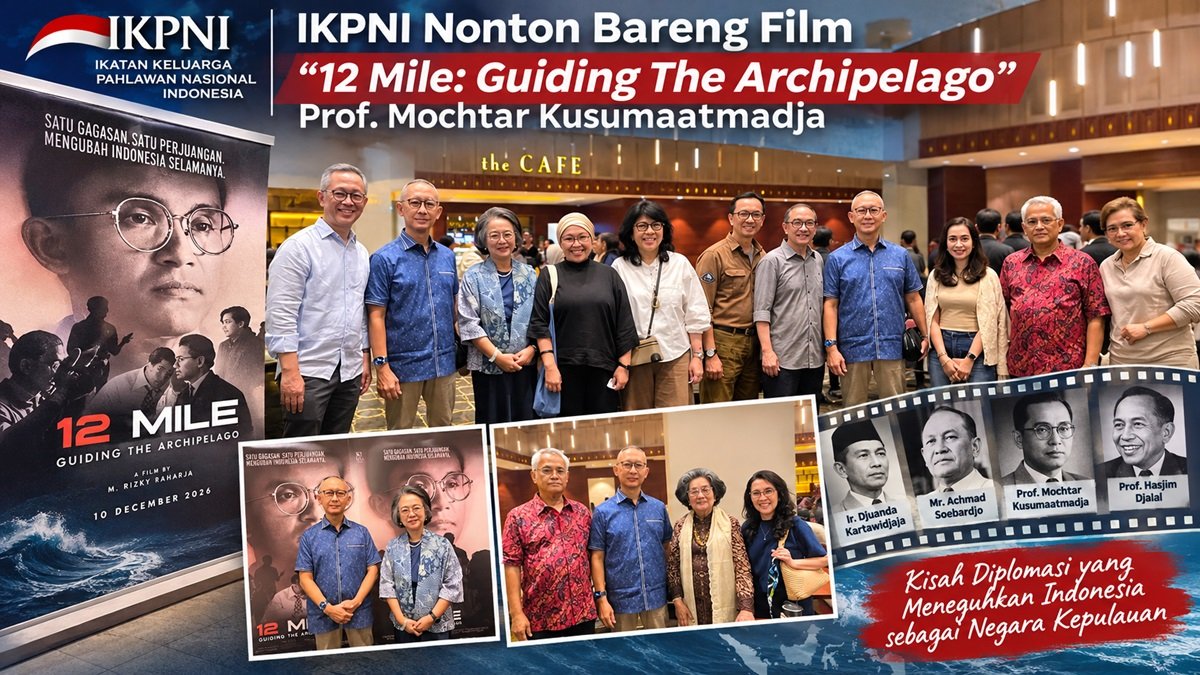
The struggle to establish Indonesia as an archipelagic state and secure international recognition of its maritime boundaries took centre stage at a special screening of 12 Mile: Guiding The Archipelago, organised by the Indonesian National Heroes’ Family Association (IKPNI) at Cinema XXI, Kemang Village, South Jakarta, on Sunday.
The film revisits the diplomatic journey of Prof. Mochtar Kusumaatmadja, whose ideas and strategic efforts helped transform the way the international community viewed Indonesia’s maritime territory and its status as an archipelagic nation.
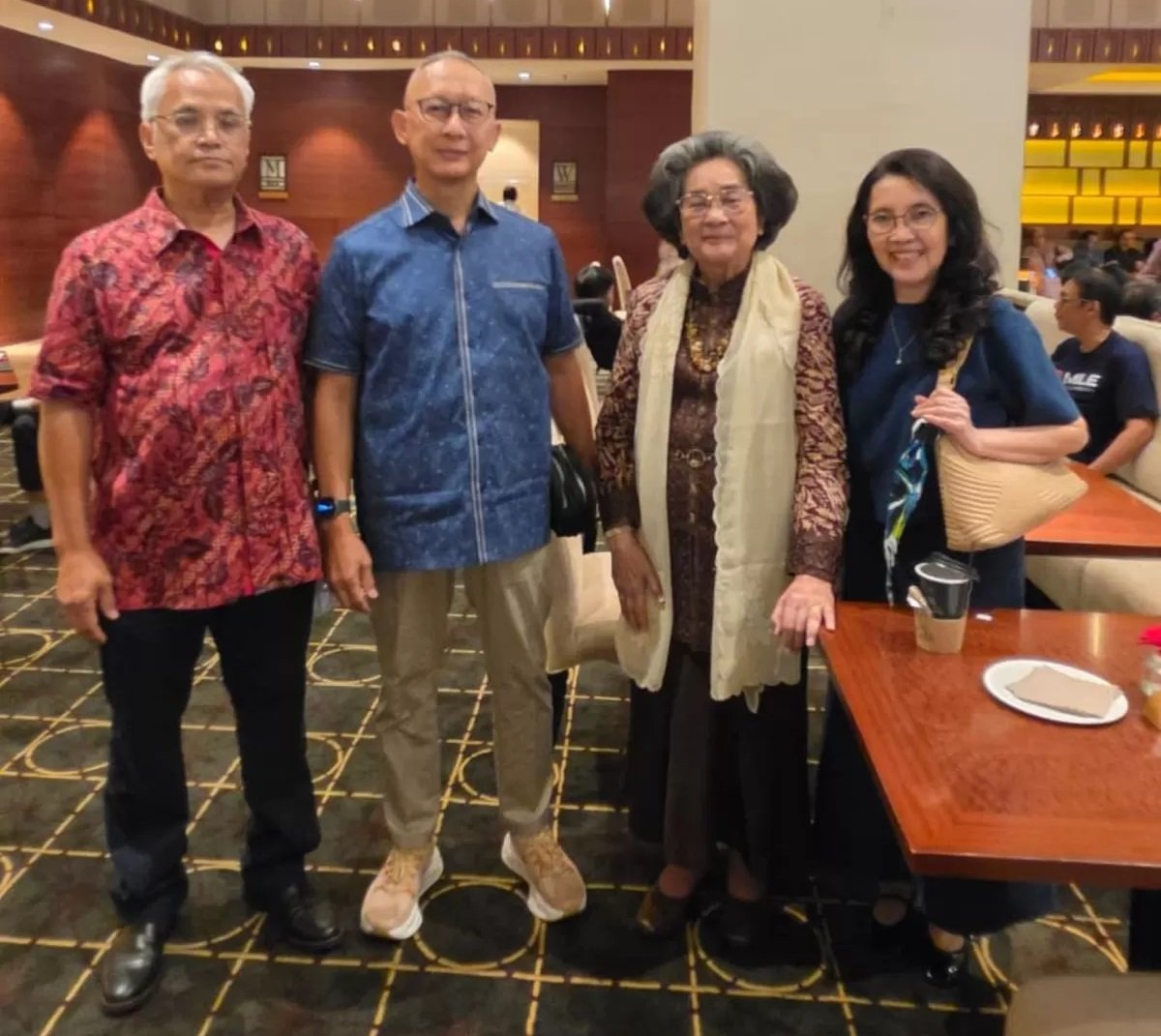
The screening was attended by IKPNI chairwoman for the 2024–2029 period, Prof. Dr. Meutia Farida Hatta Swasono, along with a number of association members, including Agustanzil, Upi Sjahrir, Indah, Radja, Ismet Wibowo, Ferhat, Wido, Tuta, Inong, Murni, Bambang Wasono, Budi and Retha. Other attendees included Ita, Ichdar, Dony, Wisnu and Ira.
Representing Mochtar Kusumaatmadja’s family were Prof. Armida Alisyahbahna, former minister of national development planning and head of the National Development Planning Agency (Bappenas), and Askari Kusumaatmadja.
Presented as a docudrama, 12 Mile: Guiding The Archipelago explores Mochtar’s ideas, perseverance and diplomatic strategies in pursuing international recognition of Indonesia as an archipelagic state. The film traces roughly 25 years of diplomatic efforts to reshape the international understanding of Indonesia’s maritime boundaries.
It also brings to life several prominent figures whose contributions were instrumental in the country’s maritime diplomacy, including Ir. Djuanda Kartawidjaja, the initiator of the Djuanda Declaration; diplomat Mr. Achmad Soebardjo; Mochtar Kusumaatmadja, a central figure in developing the archipelagic-state legal concept; and Prof. Dr. Hasjim Djalal, a diplomat and maritime law expert who helped strengthen Indonesia’s position in negotiations over the United Nations Convention on the Law of the Sea (UNCLOS).
UNCLOS is an international agreement governing countries’ rights, jurisdiction and responsibilities over their maritime territories and marine resources.
Before the diplomatic campaign, Indonesia’s waters were largely treated as spaces separating individual islands. Under the Dutch colonial-era regulation of 1939, the country’s territorial waters were limited to three nautical miles from the coast of each island, leaving much of the sea between the islands outside the unified national maritime framework.
The Djuanda Declaration, proclaimed on Dec. 13, 1957, marked a major turning point. Indonesia asserted that the waters surrounding and connecting its islands were an inseparable part of the nation’s territory, forming a unified archipelago.
The proposal, however, faced considerable resistance from the international community.
Indonesia spent more than two decades pursuing diplomatic recognition of the archipelagic-state concept, culminating in its acceptance under UNCLOS, which was agreed upon on Dec. 10, 1982, in Montego Bay, Jamaica. The convention entered into force on Nov. 16, 1994.
Ismeth Wibowo, the eldest grandson of Djuanda Kartawidjaja, praised the film for presenting a complex historical and diplomatic story in an engaging and accessible manner.
He said the docudrama successfully conveyed the maritime diplomacy and struggle of Mochtar Kusumaatmadja without making the historical narrative overly complicated, while retaining its significance for younger audiences.
“The film presents the history of maritime diplomacy and Prof. Mochtar Kusumaatmadja’s struggle in a light, accessible way that remains relevant to young people, while carrying a profound message about national sovereignty,” Ismeth said.
He encouraged young Indonesians to watch the film, saying that revisiting the struggles of the country’s founding figures could strengthen their sense of patriotism and national identity.
“This film portrays how our founding fathers fought for the sovereignty of this nation. Hopefully, it will inspire us to love our country even more,” he said.
Ismeth also highlighted Dec. 13, the date of the Djuanda Declaration, which is now commemorated by the Indonesian government as Nusantara Day.
He noted that the film Djuanda: Pemersatu Laut Indonesia was officially launched on Feb. 22, 2025, at Muhammadiyah University of Yogyakarta (UMY).
The screening of 12 Mile: Guiding The Archipelago serves as a reminder that Indonesia’s maritime sovereignty was not simply a matter of geography, but the result of sustained political vision, legal reasoning and diplomatic persistence.
More than six decades after the Djuanda Declaration, the struggle to unite Indonesia’s islands through a shared maritime identity remains a significant part of the country’s historical legacy — one that the film seeks to bring closer to a new generation.