IndonesianTalk.com — Fadli Zon Meets Grandson of National Hero Djuanda, Explores Cultural Collaboration
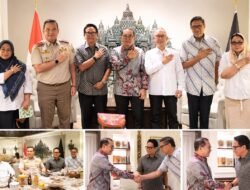
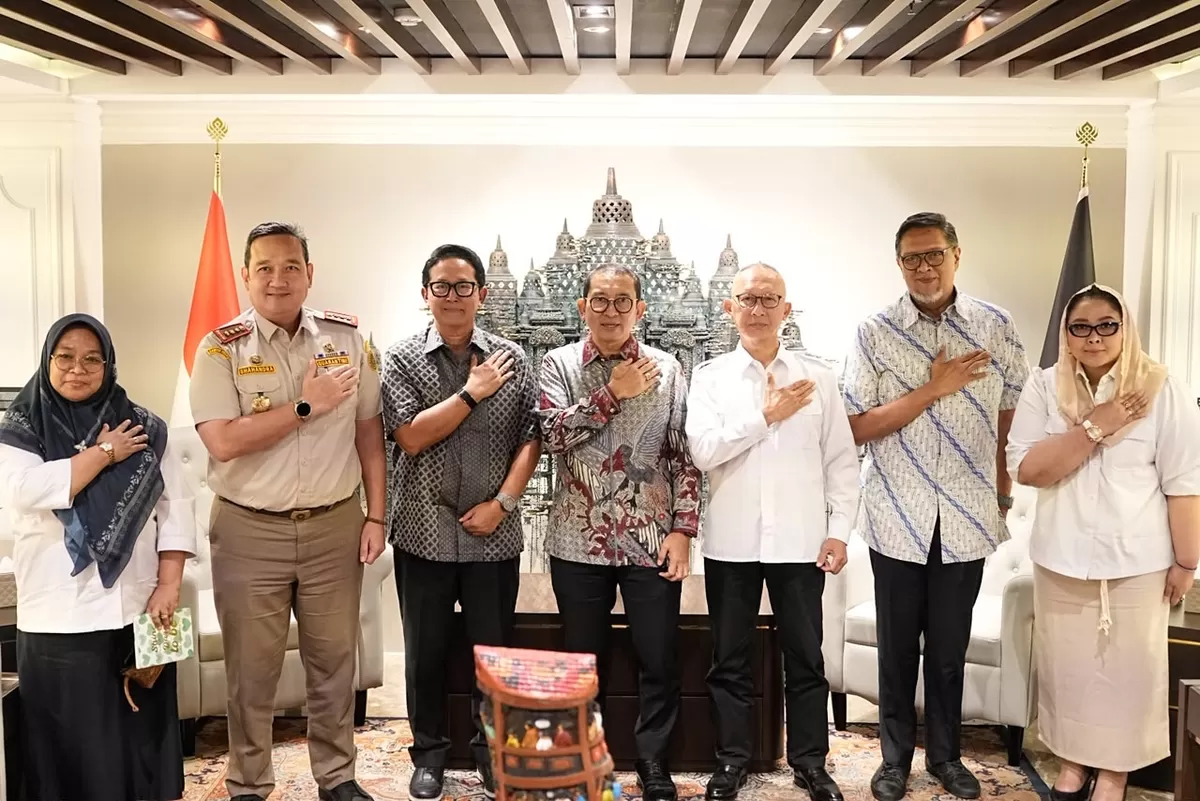
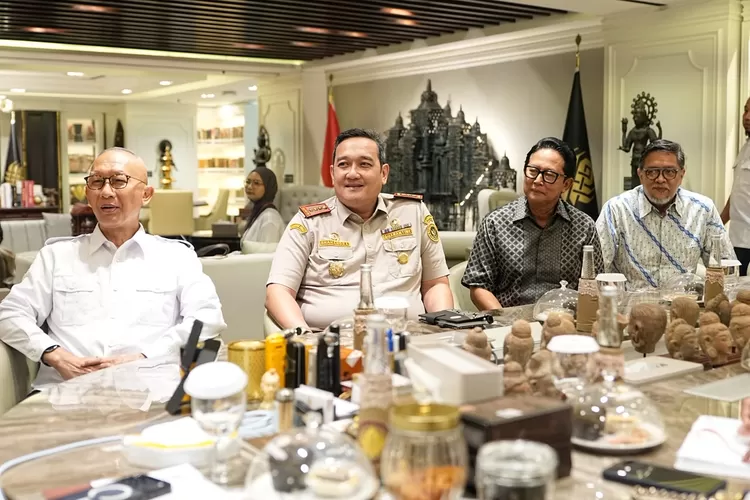
JAKARTA – Culture Minister Fadli Zon met with Ismeth Wibowo Amirullah, the eldest grandson of former Indonesian prime minister Ir. H. Djuanda Kartawidjaja, and other members of the family at the Culture Ministry’s headquarters in Jakarta on Monday afternoon, Nov. 23, 2026.
The meeting, held at the Matraman Room on the second floor of Building E, was an opportunity to strengthen ties while discussing efforts to preserve the historical legacy and values embodied by one of Indonesia’s prominent founding-era statesmen.
Fadli was accompanied by his special staff member for legal affairs and intellectual property, B.R.A. Poetri Wulan Sari Dewi, also known as Gusti Putri; Director of History and Museums Endah Budi Heryani; and Director of Cultural Heritage Agus Widiatmoko.
Ismeth was joined by three other grandchildren of Djuanda: Indratono Soenaryo, Muhammad Andre Pasha and Shahandra Hanitiyo.
In a post on his X account, Fadli described the gathering as part of broader efforts to keep public awareness of Djuanda’s contributions to the country alive.
He noted that Ismeth had been actively involved in various historical and national heritage preservation events, including the launch of the biographical film Djuanda: Pemersatu Laut Indonesia (Djuanda: Uniting Indonesia’s Seas) in February 2025 and the inauguration of the Soemitro Djojohadikusumo Library in October 2026.
The two sides also explored opportunities for cross-sector collaboration to support the advancement of Indonesian culture.
“We discussed potential cooperation and opened up opportunities for dialogue and collaboration in advancing the nation’s culture,” Fadli wrote on his X account, @fadlizon, in a post cited on Tuesday, Nov. 24.
During the meeting, they reviewed several books documenting Djuanda’s life and public service. Fadli expressed hope that the gathering would pave the way for broader cooperation, particularly in introducing the country’s history and the exemplary contributions of its national figures to younger generations.
He also proposed organizing a joint screening of the film Djuanda: Pemersatu Laut Indonesia.
Ismeth welcomed the meeting, describing the discussion as warm and engaging. It also brought back memories of several figures who had played significant roles in Indonesia’s history, including Djuanda and Prof. Soemitro Djojohadikusumo, the father of President Prabowo Subianto.
“We are delighted to have had the opportunity to speak with the minister in such a warm atmosphere. We are also open to collaborating on efforts to advance the nation’s culture. Indonesia has enormous cultural potential that can be developed to support the country’s progress and future,” Ismeth said.
Remembering Djuanda Through Soemitro’s Personal Account
One of the highlights of the meeting came when Fadli showed the family a personal account written by Prof. Soemitro Djojohadikusumo, titled Ir. H. Djuanda yang Saya Kenal (Ir. H. Djuanda as I Knew Him).
The account appears in the book Pahlawan Nasional Ir. H. Djuanda: Negarawan, Administrator, dan Teknokrat Utama (National Hero Ir. H. Djuanda: Statesman, Administrator and Leading Technocrat). The book was edited by Soemitro’s son-in-law, retired National Police chief Gen. (ret.) Prof. Dr. Awaloedin Djamin, who served as police chief from 1978 to 1982. Soemitro’s account is featured on pages 249–250.
In the note, dated April 27, 2000, Soemitro recalled his first encounter with Djuanda during the Round Table Conference (RTC) in The Hague, the Netherlands, in 1949.
At the time, Djuanda was part of the Indonesian delegation led by Mohammad Hatta. He was appointed chairman of the Economic and Financial Commission, while Soemitro served as its deputy chairman.
Soemitro remembered Djuanda as a determined negotiator who remained composed even in difficult circumstances.
“Throughout the Round Table Conference, the late Djuanda demonstrated determination in every negotiation and consistently maintained his composure. He was rarely seen becoming anxious, and his views were always expressed clearly, making them easy for the Dutch negotiating team to understand,” Soemitro wrote.
He also highlighted Djuanda’s important role in managing the government during the early years of Indonesia’s independence.
During the first 17 years of the republic, Djuanda served in various government positions, including several ministerial posts across different cabinets. He also served as prime minister for approximately two years.
According to Soemitro, Djuanda’s extensive experience in government made him a trusted figure who was repeatedly called upon to serve, regardless of the political composition of the cabinet.
“His services were consistently sought by successive cabinets. This was because he was not a partisan of any particular group or political party. Engineer Djuanda was sociable, and his outlook was deeply nationalist in the true sense of the word: he consistently fought for the interests of the Indonesian nation and the welfare of its people,” Soemitro wrote.
Soemitro also recalled Djuanda’s ability to treat people equally, without regard to rank or social standing.
One particular memory stood out: when Soemitro returned from an assignment in the United States as Indonesia’s chargé d’affaires, Djuanda personally came to welcome him at Tanjung Priok Port in Jakarta.
For Soemitro, the gesture reflected Djuanda’s strong sense of friendship, loyalty and solidarity.
Djuanda’s engineering education, he added, had also shaped his approach to work. Precision, concentration and dedication to completing every task were principles that defined his professional character.
“This was also what he applied to himself, in order to serve as an example for younger generations,” Soemitro wrote.
A Historical Legacy for the Next Generation
Ir. H. Djuanda Kartawidjaja was born in Tasikmalaya, West Java, on Jan. 14, 1911. He was a prominent technocrat and statesman who served as Indonesia’s 10th prime minister from 1957 to 1959 and finance minister from 1959 to 1962.
His name is also closely associated with the Djuanda Declaration of Dec. 13, 1957, a landmark in Indonesia’s maritime history that established the principle of the archipelagic state, affirming the unity of the waters surrounding the country’s islands.
Djuanda’s life and public service represent more than a chapter in Indonesia’s past. His experience and ideas on governance, nationalism and the national interest remain relevant and deserve to be introduced to younger generations.
The meeting between Fadli Zon and Djuanda’s family has opened up opportunities to bring this historical legacy closer to the public through cultural initiatives, including film screenings, literacy programs, public discussions and cross-sector partnerships.
Preserving the legacy of national figures, the meeting suggested, is not simply about remembering the past. It is also about ensuring that the values they stood for continue to inform the nation’s future.