HarianKami.com –– Economic Outlook Indonesia 2026: A New Wave of Optimism
By Eko Wahyuanto
President Prabowo Subianto’s presence at the Indonesia Economic Outlook 2026 forum was far from a ceremonial gesture.
Amid intensifying global geopolitical shifts and a reconfiguration of economic power, his decision to stand directly before market players, investors and economists signaled a constructive political posture.
The narrative is clear: Indonesia is not standing still—it is accelerating toward its destiny as a new economic powerhouse.
Prabowo’s result-oriented leadership style is strongly reflected in his 2026 economic vision. A 5 percent growth rate, often seen as stable, is now framed as a “comfort zone.”
He is pushing toward 8 percent. For skeptics, this may sound overly ambitious. For the President, it is a historical necessity—one that must be supported by strong economic fundamentals.
Market Certainty
Markets and investors thrive on certainty. The President’s direct engagement at the Economic Outlook forum sends a strong signal that Indonesia’s economic steering wheel is firmly in the hands of a stable and decisive leader.
Prabowo emphasized that the development agenda inherited from previous administrations will not only continue but be accelerated, with a sharper focus on economic sovereignty.
The 2026 policy direction rests on three key pillars: aggressive downstream industrialization, food resilience (Food Estate 2.0) and energy independence.
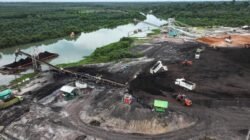
This is not mere rhetoric. It is an economic manifesto designed for disciplined execution. Downstreaming, long considered a flagship policy, will expand beyond nickel into copper, bauxite and even agricultural commodities such as palm oil and seaweed.
Markets are likely to interpret this as Indonesia’s firm commitment to move beyond being a low-cost raw material exporter toward becoming a global manufacturing hub with a stronger and more resilient trade balance.
Economic Transformation
One of the most progressive elements in the President’s speech is the repositioning of social programs as instruments of macroeconomic policy. The Free Nutritious Meals (MBG) program, for instance, is not simply social assistance—it is a powerful driver of aggregate demand.
Through 23,000 nutrition service units across 38 provinces, the government positions itself as a standby buyer for local farmers, livestock breeders and fishermen.
This will trigger a dynamic supply chain at the grassroots level, energizing rural economies and strengthening micro, small and medium enterprises (MSMEs). It is a “trickle-up” economic strategy—building from the bottom to reinforce the national structure.
By 2026, large-scale investments in agriculture are expected to begin yielding tangible results. Dependence on food imports will decline, and the rupiah is projected to gain strength.
The Archipelago as a Strategic Buffer
The global economy in 2026 will likely remain overshadowed by commodity price volatility and trade tensions between major powers. Under Prabowo’s leadership, Indonesia’s long-standing “free and active” foreign policy provides a strategic advantage.
Indonesia positions itself as a bridge—welcoming capital from Beijing and technology from Washington.
The President reassures markets that economic nationalism does not equate to protectionism. Instead, it reflects “open nationalism”—a framework that welcomes foreign investment, provided it ensures technology transfer, job creation and domestic value-added.
For investors, this is a golden opportunity. Investing in Indonesia means entering a country rich in resources and anchored in political stability. Downstreaming will be expanded to 26 strategic commodities, linking large-scale industries with grassroots economic actors.
“Farmers used to wonder who would buy their harvest. Now, the government is a standby buyer.”
This message underscores a central principle: no citizen should be left behind in the nation’s economic progress.
Bringing Villages to the Global Market
The President also highlighted a crucial issue: export-supporting infrastructure at the regional level. Many local products fail to compete globally not because of poor quality, but due to high logistics costs.
The solution lies in building connectivity—linking rural production centers to export gateways through logistics corridors.
In parallel, the government is strengthening 80,000 cooperatives with cold storage facilities, warehouses and distribution fleets to ensure that products such as highland coffee and coastal fish reach global markets in optimal condition.
The development of regional digital hubs will further enable MSMEs in remote areas to directly access global platforms, reducing dependency on intermediaries that often erode profit margins.
Inclusive Growth and Fiscal Discipline
Amid these ambitions, the commitment to eliminating extreme poverty remains intact. Affordable financing schemes and technical assistance will be expanded to empower small entrepreneurs, steering them away from predatory lending and toward export-oriented growth.
At the same time, fiscal discipline remains a priority. Debt ratios will be kept within prudent limits, supported by improved state revenue through tax digitalization and optimization of the mining sector.
Digital transformation is no longer a slogan. Bureaucratic digitalization is being implemented to reduce corruption and inefficiency, while improving ease of doing business—key factors in attracting investment into the real sector and creating jobs.
A Clear Direction Forward
Reading both the substance and symbolism of the Indonesia Economic Outlook 2026 forum, the business community sees a clear trajectory. Prabowo Subianto is laying the foundation for Indonesia’s “golden bridge” toward becoming a developed nation—economically independent and politically sovereign.
Challenges will inevitably arise. Yet, with strong leadership, policy consistency and public support, previously “impossible” targets may well become achievable.
Indonesia in 2026 reflects a nation with renewed confidence—one that is no longer dictated by global markets, but instead emerges as a key intersection between high growth and resilient stability.
The time has come for the world to see the archipelago not as a bystander, but as a central player in the global economic arena.
- Dr. Eko Wahyuanto is a public policy observer.