IndonesianTalk.com — Sultan Baktiar Najamudin Wins detikcom Awards 2026 for Championing Collaborative Leadership
DPD RI chairman recognized for his consistent efforts to promote equitable development, strengthen regional autonomy and foster cooperation between government institutions.
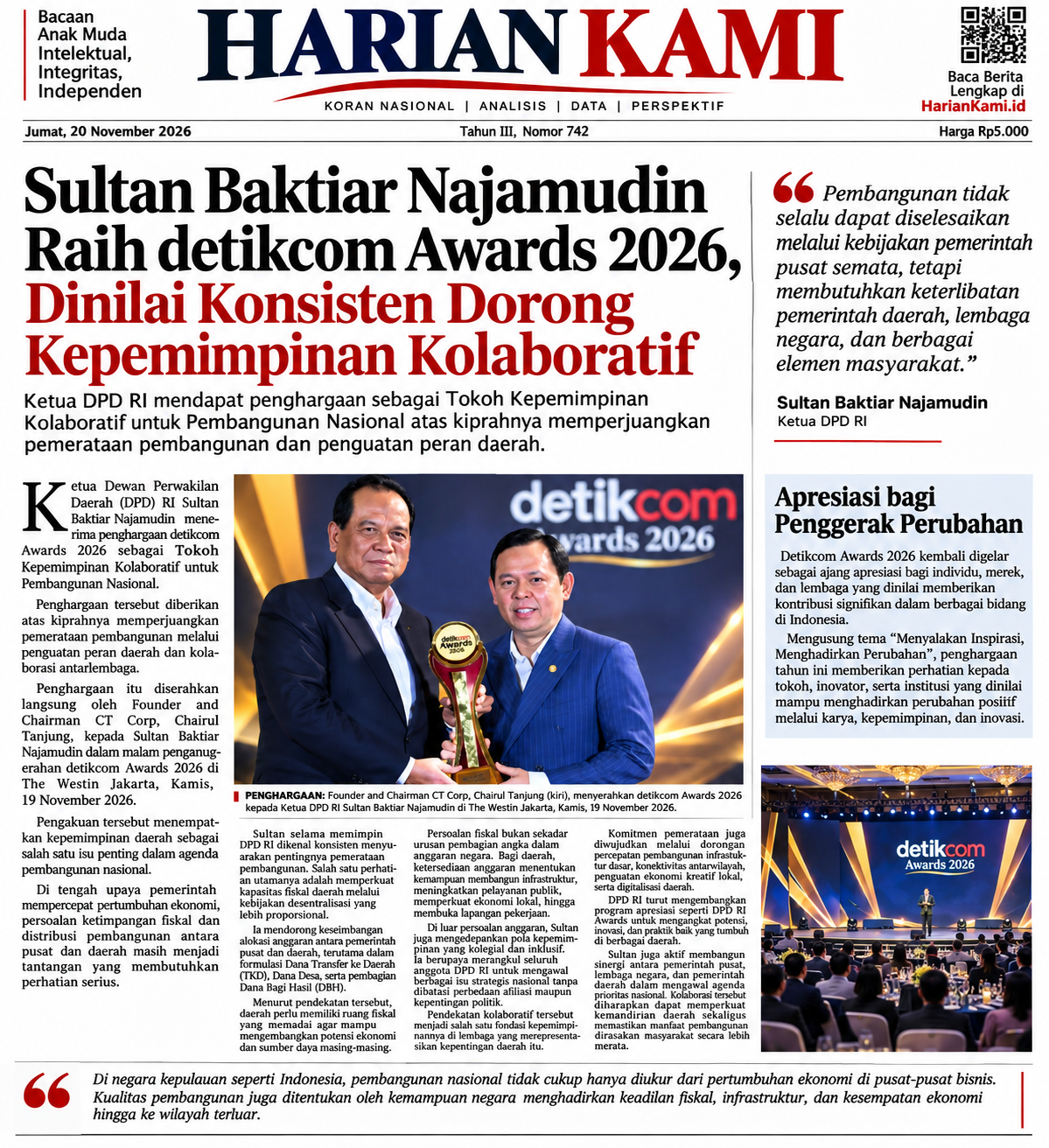
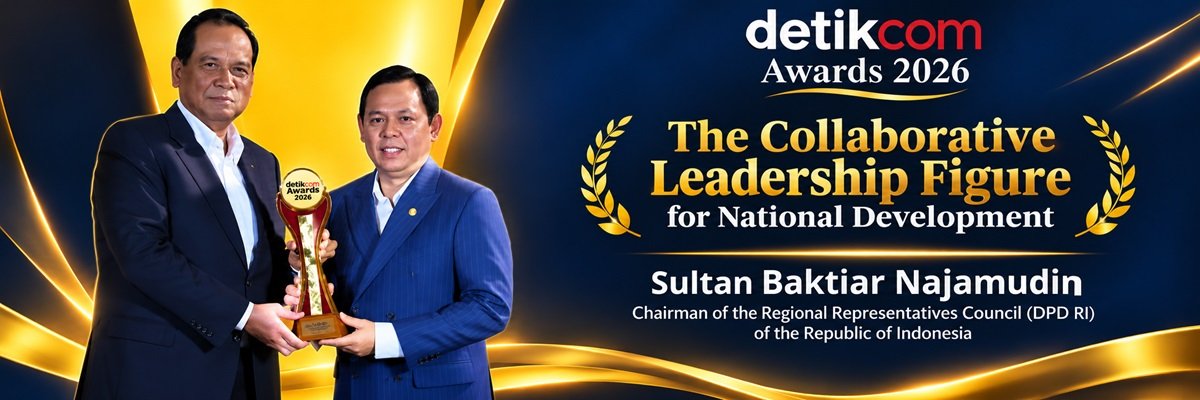
Chairman of the Regional Representative Council (DPD RI) Sultan Baktiar Najamudin has received the Collaborative Leadership for National Development award at the 2026 detikcom Awards, in recognition of his efforts to promote more equitable development across Indonesia through stronger regional representation and inter-institutional cooperation.
The award was presented by CT Corp Founder and Chairman Chairul Tanjung to Sultan during the 2026 detikcom Awards ceremony at The Westin Jakarta on Thursday, November 19, 2026.
The recognition highlights the growing importance of regional leadership in Indonesia’s national development agenda, particularly as the government seeks to accelerate economic growth while addressing persistent disparities in fiscal capacity and development between the central government and regional administrations.
Throughout his tenure as DPD RI chairman, Sultan has consistently advocated a more equitable distribution of development resources, emphasizing the need to strengthen regional fiscal capacity through a more balanced decentralization framework.
One of his key priorities has been pushing for a fairer allocation of state funds between central and regional governments, particularly through the formulation of Regional Transfers (TKD), Village Funds and Revenue-Sharing Funds (DBH).
Under this approach, regional governments should have sufficient fiscal space to develop their respective economic potential, manage local resources and improve public welfare.
For regions, fiscal policy is about far more than the distribution of figures in the state budget. Adequate funding directly determines their ability to build infrastructure, improve public services, strengthen local economies and generate employment opportunities.
Sultan has also promoted a collegial and inclusive leadership approach within the DPD RI, seeking to bring together members from different political backgrounds and affiliations to address strategic national issues.
His collaborative approach reflects the understanding that national development cannot be achieved through central government policies alone. It requires meaningful participation from regional administrations, state institutions and various elements of society.
Beyond fiscal decentralization, his agenda has included accelerating the development of basic infrastructure, improving interregional connectivity, strengthening local creative economies and promoting digital transformation across the regions.
The DPD RI has also introduced recognition initiatives, including the DPD RI Awards, to showcase regional potential, innovation and best practices emerging from communities across the country.
The initiative seeks to ensure that national development is not concentrated solely in major urban and business centers, but also provides opportunities for regions to demonstrate their strengths and contribute to the country’s economic progress.
Sultan has also actively encouraged stronger coordination between the central government, state institutions and regional administrations in implementing national priority programs. Such cooperation is expected to strengthen regional self-reliance while ensuring that the benefits of development are distributed more widely among the population.
Recognizing Agents of Change
The 2026 detikcom Awards is an annual recognition event honoring individuals, brands and institutions considered to have made significant contributions across various sectors in Indonesia.
This year’s event carries the theme “Igniting Inspiration, Bringing About Change,” highlighting leaders, innovators and institutions whose work, leadership and innovations have generated positive changes in society.
Sultan’s award underscores the importance of leadership capable of bridging the interests of the central government and regional administrations in a country as geographically diverse as Indonesia.
As an archipelagic nation, Indonesia’s development cannot be measured solely by economic growth in major business centers. It must also be assessed by the government’s ability to deliver fiscal justice, infrastructure and economic opportunities to communities in even the country’s most remote regions.
This is where collaborative leadership becomes particularly relevant: ensuring that regional governments are not merely recipients of national policies, but active participants in shaping the country’s development priorities.
Ultimately, equitable development requires a stronger partnership between Jakarta and the regions, with regional voices playing a meaningful role in determining Indonesia’s national future.