The Journey of SS Budi Raharjo
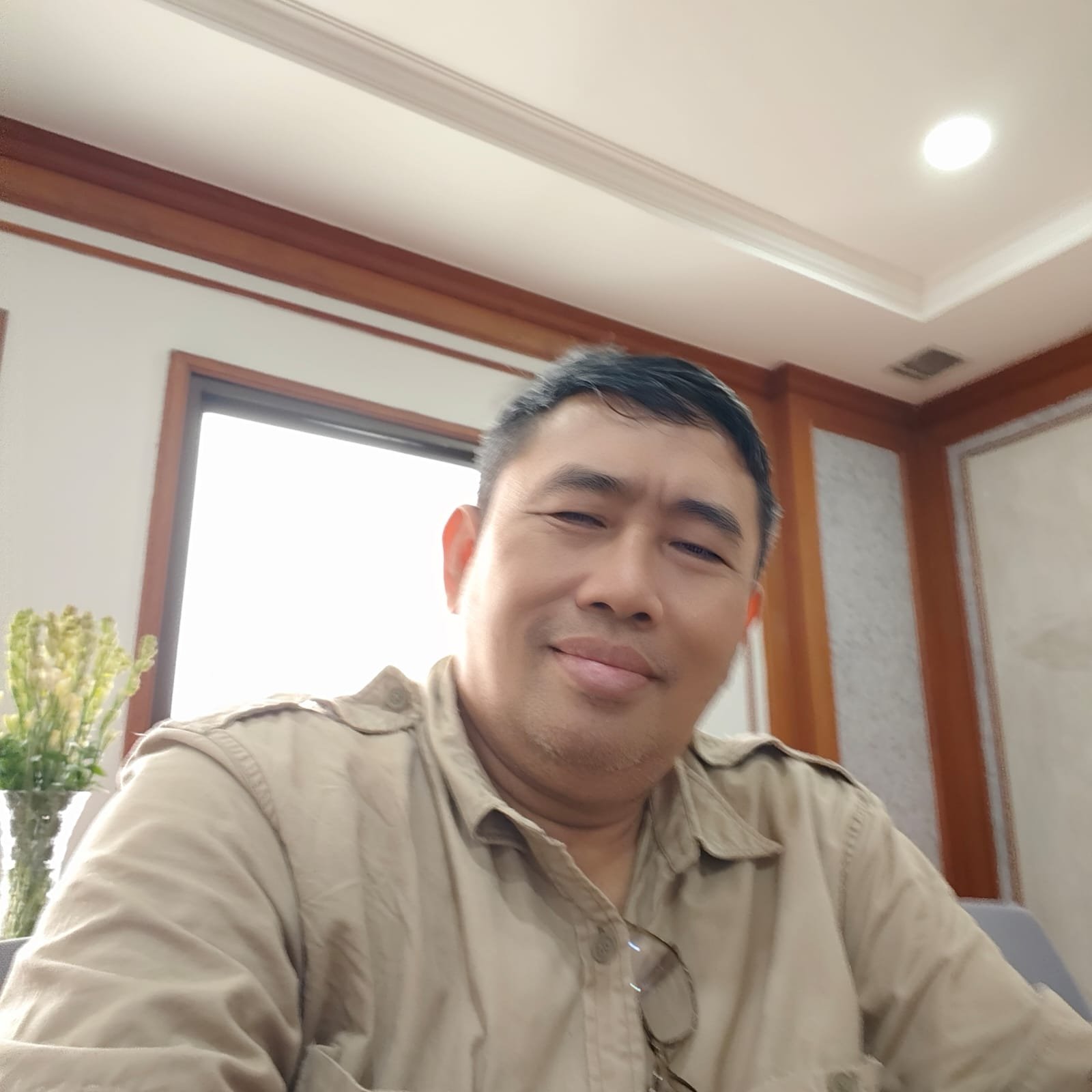
Veteran journalist, media executive, biographer and digital security advocate Stephanus Slamet Budi Raharjo has spent more than three decades navigating Indonesia’s evolving information landscape.
JAKARTA – For Stephanus Slamet Budi Raharjo, journalism has never been merely about writing stories or meeting editorial deadlines. It has been a lifelong journey of understanding people, examining power, documenting change and navigating the increasingly complex relationship between information and society.
Better known as SS Budi Raharjo, or simply Budi Jojo among colleagues, he has built a career spanning print journalism, media management, digital publishing, cybersecurity and government communications.
Born in Purwokerto, Central Java, on Sept. 7, 1968, Budi represents a generation of Indonesian media professionals who have witnessed the transformation of the press from traditional printing operations to today’s fast-moving digital ecosystem.
He graduated with a bachelor’s degree in economics from Krisnadwipayana University (UNKRIS) in 1994 before pursuing a master’s degree in management at STIE Bisnis Indonesia.
Yet his most formative education, he would argue, came not from university lecture halls but from the newsroom.
Learning the craft in the Tempo tradition
Budi began his professional journey in the journalistic environment of the Tempo magazine group, where he developed an understanding of reporting, editorial discipline and the importance of presenting information with context.
He subsequently built his career at Majalah MATRA, a publication known for its profiles of prominent figures, human-interest stories and explorations of the personal lives behind public reputations.
His responsibilities gradually expanded beyond reporting. He eventually became editor-in-chief, overseeing editorial direction and the development of the magazine.
At MATRA, profiling was more than documenting someone’s achievements or official position. It involved examining personal histories, professional struggles, defining decisions and the experiences that shaped an individual’s character.
This approach helped establish one of Budi’s distinctive interests: biography writing as a means of understanding people beyond their public identities.
He also participated in developing Matranews.id, reflecting his involvement in the publication’s transition from print journalism to digital media.
Building business journalism through EKSEKUTIF
Budi’s professional journey later expanded into business journalism through Majalah EKSEKUTIF, a business publication established in 1979.
As its chief executive officer, he was involved in managing and developing the publication, gaining broader exposure to Indonesia’s corporate landscape, economic developments and leadership issues.
His experience at MATRA and EKSEKUTIF provided two different but complementary perspectives.
While MATRA explored the human dimensions of public figures, EKSEKUTIF offered insights into business leadership, corporate strategy and economic developments.
He subsequently became involved in managing several digital media platforms, including HarianKAMI.com, Tiras.id and BeritaSenator.com.
For Budi, digital transformation is not simply about transferring newspaper content onto a website. It requires changes in newsroom operations, audience engagement, credibility management and the sustainability of media businesses.
Telling the stories behind prominent figures
One of the most consistent elements of Budi’s career has been his involvement in biographical writing.
Among the books associated with his work are Soeyono: Bukan Puntung Rokok, featuring retired Army lieutenant general Soeyono; a biography of retired Navy admiral Ade Supandi, who served as chief of staff of the Indonesian Navy from 2014 to 2018; and Sisi Lain: Tjahjo Kumolo, which explores the personal side and life journey of the former government minister.
Beyond these publications, hundreds of profiles of prominent figures have appeared as part of his editorial and writing work at MATRA and other media outlets.
For Budi, biography writing requires considerably more than collecting information and arranging events chronologically.
It demands interviews, observation, verification and an ability to identify the experiences that reveal a person’s character.
A public position, he believes, is only one part of someone’s identity. Personal struggles, difficult decisions, failures and relationships can often provide a more meaningful understanding of an individual’s life.
Investigative journalism and the pursuit of facts
Budi’s professional development also included investigative journalism training and reporting scholarships supported by the Ford Foundation, the Institute for the Study of the Free Flow of Information (ISAI) and LP3Y.
These experiences introduced him to investigative reporting methods that emphasize accuracy, verification, document analysis and the ability to identify relationships between seemingly unrelated facts.
Investigative journalism requires patience and discipline. Information is not always readily available, and important details may remain hidden beneath official statements or competing interests.
For a journalist, writing skills are essential. But the ability to establish whether information is accurate is even more fundamental.
Making writing accessible to professionals
Beyond his newsroom responsibilities, Budi has also developed a career as a writing coach and trainer.
His training program, titled Bagaimana Menulis Itu Gampang (Writing Is Easier Than You Think), has been designed for government functional officers, civil servants, state-owned enterprise professionals and corporate employees.
He has also served as a mentor in creative writing activities involving the Embassy of the Netherlands and conducted feature-writing training for professionals, including Telkom employees.
His approach is based on a straightforward proposition: everyone has a story, but not everyone knows how to turn that story into an engaging and well-structured piece of writing.
Writing, in this context, is not simply a matter of talent. It involves learning how to identify ideas, establish a perspective, organize information, construct paragraphs and communicate effectively.
His years in journalism have provided a practical foundation for translating newsroom techniques into the communication needs of government institutions and corporations.
Organizing Indonesia’s digital media community
As Indonesia’s media industry moved increasingly online, Budi also became involved in efforts to organize digital media publishers.
He previously led the Forum of Digital Media Leaders and served as chairman of the Indonesian Digital Media Association (AMDI).
The organizations provided platforms for media owners and executives to discuss professionalism, business sustainability and the changing position of online publications within Indonesia’s national press ecosystem.
His involvement reflected an interest beyond producing news: strengthening the institutional foundations of the media industry itself.
In December 2025, he was reported to have stepped down as AMDI chairman, effective Dec. 8, marking another transition in his professional journey.
Where journalism meets cybersecurity
Another dimension of Budi’s professional interests is cybersecurity.
He has been involved in cybersecurity communities and discussion networks, including the Indonesia Cyber Security Forum. His professional profile also identifies him as the initiator of Densus Digital.
The intersection between journalism and cybersecurity is particularly relevant in an era when information has become both an essential public resource and a potential source of vulnerability.
Media organizations require access to information and the freedom to distribute it. At the same time, individuals, businesses and governments must protect their data and communication infrastructure against unauthorized access, digital attacks and information manipulation.
His experience in journalism provides a perspective on the importance of access to information, while his cybersecurity interests bring attention to the need for protecting digital systems and communications.
He has also participated in educational and communication activities with the Jakarta branch of the National Narcotics Agency (BNN), extending his experience into public communication and prevention campaigns.
A new chapter in government communications
In 2026, Budi’s professional journey entered another phase through his reported involvement with the Republic of Indonesia’s Government Communications Agency (Badan Komunikasi Pemerintah, or Bakom RI), particularly in the deputy unit responsible for government communications and risk mitigation.
Moving from journalism into government communications represents a significant change in professional environment.
Journalism is expected to report facts, scrutinize those in power and perform a social-control function. Government communications, meanwhile, are responsible for explaining public policies, communicating government programs and helping citizens understand policy decisions.
Although their institutional responsibilities differ, both operate within the same fundamental challenge: public trust.
A journalist’s understanding of how information is gathered, interpreted and received can provide valuable insights into government communication strategies.
Policies may be technically sound, but without clear explanations, they can generate confusion, misunderstanding or public resistance.
Communication risk mitigation therefore becomes an important part of public-sector communication, particularly when institutions face controversies, reputational challenges or rapidly escalating public concerns.
At the same time, effective government communication must remain grounded in accountability, transparency and respect for the independence of the press.
For Budi, entering the government bureaucracy also means learning a different institutional culture and understanding the complexities of policy coordination.
Three decades of navigating the information age
Looking back at his professional journey, three interconnected fields stand out: journalism, information technology and strategic communications.
MATRA provided the opportunity to explore human stories and biographies. EKSEKUTIF broadened his understanding of business and leadership. Digital media organizations exposed him to the changing economics of journalism. Cybersecurity introduced new questions about information protection, while government communications brought him closer to the challenge of translating public policy into messages that people can understand.
His career illustrates the changing role of a senior journalist in an era when information travels faster than ever and public trust has become an increasingly valuable asset.
Budi Jojo’s professional interests extend beyond the question of how news is written. They encompass broader concerns about how information is produced, who controls its distribution, how its accuracy is established and how public confidence can be maintained.
More than three decades after entering the media industry, one principle remains central to his work: information is never merely a collection of words.
It carries responsibility — to facts, to individuals and to society.
From printing presses and editorial desks to digital platforms and government communication rooms, Stephanus Slamet Budi Raharjo continues to navigate the changing landscape of Indonesia’s information industry.