IndonesianTalk.com — The Flame of Struggle in Old Jakarta: Honoring Heroes, Shaping Indonesia’s Future
Over two days in Jakarta’s historic Kota Tua district, descendants of national heroes, government officials and young people gathered to preserve the nation’s historical memory. Their message was clear: heroism should not remain confined to history books, but must live on through action, integrity and a commitment to the people.
Amid the colonial-era buildings and historical landmarks of Fatahillah Square in Jakarta’s Old Town, the spirit of Indonesia’s struggle for independence was brought back to life.
But this time, the message was not about battlefield victories or heroic tales of resistance against colonial rule. Instead, the focus was on a more pressing question for the present generation: how to carry forward the ideals and aspirations of the nation’s founding figures.
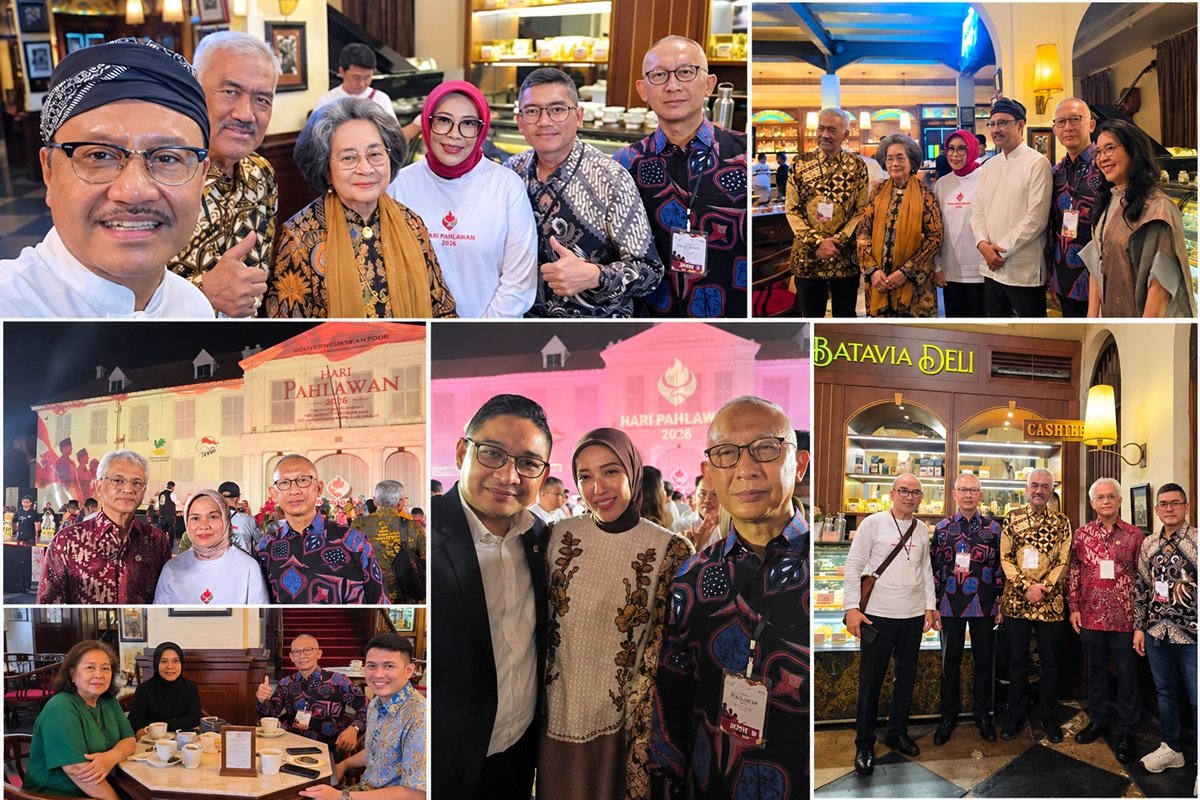
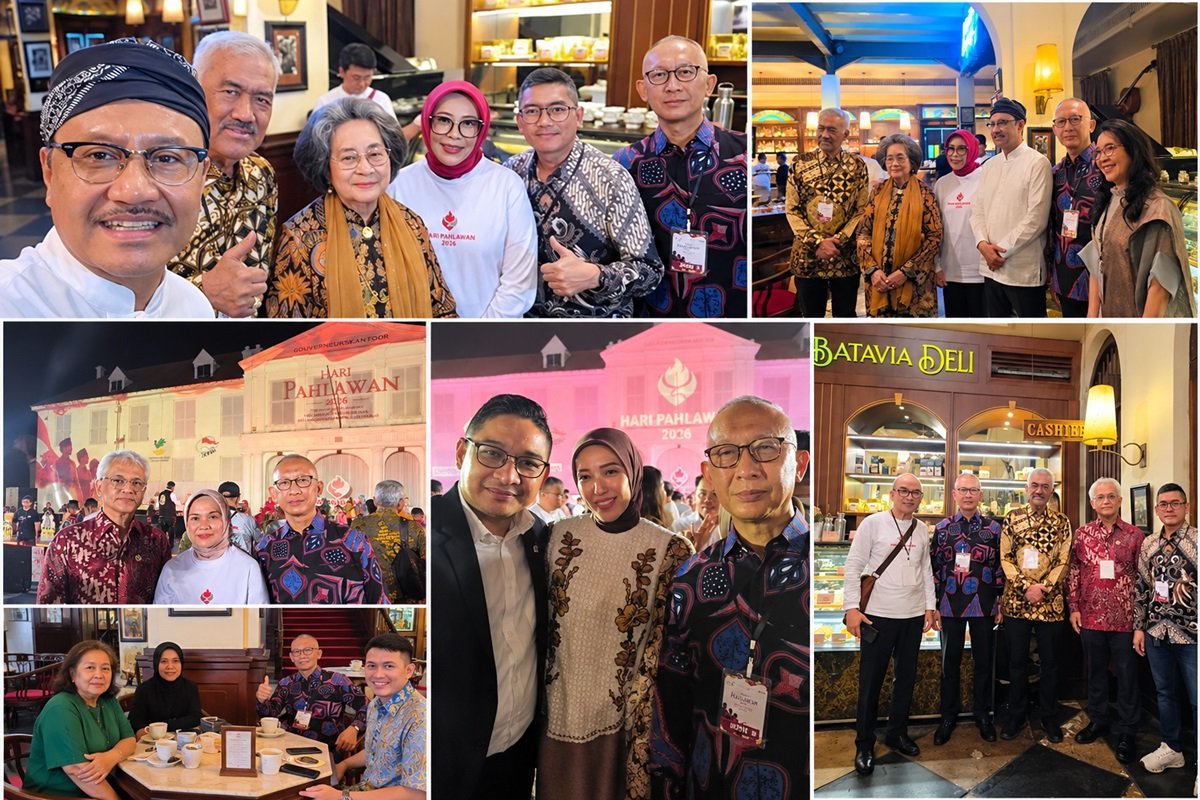
The Social Affairs Ministry held a two-day commemoration of National Heroes Day on Nov. 1-2, 2026, at the historic Kota Tua Fatahillah complex in Jakarta.
Held under the theme “My Hero, My Role Model: Moving Forward Together to Continue the Struggle,” the event brought together government officials, descendants of national heroes, lawmakers, students and members of the public.
The main ceremony took place on Monday, Nov. 2, from 4 p.m. to 9 p.m.
Social Affairs Minister Saifullah Yusuf, popularly known as Gus Ipul, attended with his wife, Fatma Saifullah Yusuf. Also present were Deputy Social Affairs Minister Agus Jabo Priyono and his wife, Intan Nurul Fadilah; the ministry’s Director General of Social Empowerment, Mira Riyati Kurniasih; Secretary General Hasan Chabibie; and Indonesian National Heroes Family Association (IKPNI) chairwoman Meutia Farida Hatta Swasono.
Member of House of Representatives Commission VIII Sigit Purnomo, better known as Pasha Ungu, also attended with his wife, Adelia Wilhelmina Pasha.
Particular attention was given to the families of Indonesia’s national heroes, whose presence brought the country’s history closer to the public through personal stories, family memories and inherited values.
Among those attending were descendants of Sri Sultan Hamengku Buwono IX, Adam Malik, Ir. H. Djuanda, Gen. Achmad Yani, Gen. Basuki Rachmat, Wahidin Sudirohusodo, Mohammad Yamin, Sutan Sjahrir, Haji Agus Salim, Sam Ratulangi, Gen. Soedirman and Achmad Soebardjo.
Other families represented included those of Prince Diponegoro, Mohammad Natsir, Syafruddin Prawiranegara, Dr. Moewardi, John Lie, Johannes Leimena, KH Hasyim Asy’ari, Bung Tomo, SM Amin Nasution, AA Maramis and Arnold Mononutu, among other prominent national figures.
Their presence gave the commemoration a more personal dimension. History was no longer merely something to be discussed through textbooks, monuments or street names. It was represented by people who continue to preserve the stories, memorabilia and principles inherited from generations who helped shape Indonesia.
Heroism Goes Beyond Titles and Recognition
Social Affairs Minister Saifullah Yusuf said the courage, sincerity and dedication of the country’s heroes should serve as examples in national and public life.
The heroes, he said, had never pursued positions of power as an end in themselves. Rather, they devoted their lives to the interests of society, the nation and the state.
Gus Ipul also highlighted two values that are often overlooked in discussions about heroism: discipline and integrity.
The heroes had demonstrated how public responsibilities should be carried out, he said. They protected national assets, distinguished personal interests from public responsibilities and refrained from using power as a means of accumulating excessive wealth.
The message carries particular significance as Indonesia continues to grapple with questions of governance, public accountability and the responsible use of state resources.
Nationalism, after all, cannot be measured simply by how frequently people profess their love for the country. It must also be reflected in honesty, accountability and a willingness to safeguard the public interest.
For the younger generation, these are the values that should define modern heroism.
Meutia Farida Hatta Swasono, chairwoman of IKPNI and the eldest daughter of Indonesia’s first vice president, Mohammad Hatta, stressed that National Heroes Day should not become merely an annual ritual of remembering the past.
More importantly, she said, it should serve as an opportunity to pass on the values, spirit of service and love of country embodied by the nation’s heroes.
“For us, this is one way for IKPNI to emphasize to everyone, particularly the young people here, that heroism and heroes are not only part of history. What matters more are the values, the spirit and the love of country that each of them carries within themselves,” Meutia said.
IKPNI brings together the children, grandchildren and great-grandchildren of national heroes. The organization has a moral responsibility to preserve historical memorabilia, documentation and records of their ancestors’ struggles.
Their legacies span various fields, including government, national defense, social and cultural affairs, law and education.
For Meutia, the challenge facing young Indonesians is not simply to know who the national heroes were, but to understand why they fought and how their principles can be applied to contemporary life.
“Time will continue to move forward, and life experiences will continue to unfold. But the spirit of defending Indonesia and fighting for its people so that the country can progress must remain a challenge and an effort, particularly for the younger generation, who will carry on our struggle,” she said.
She also expressed hope that Indonesia would become a country its people could be proud of, one that was developed and respected in the international community.
Under any circumstances, she added, the commitment to defending the country and the nation must never fade.
Independence Must Deliver Prosperity
A day earlier, during the opening of the commemoration on Sunday, Nov. 1, Deputy Social Affairs Minister Agus Jabo Priyono called on Indonesians to translate the spirit of the nation’s heroes into concrete action.
Independence, he said, was not a gift that had simply fallen from the sky. It was the result of a long struggle, paid for through the sacrifice of the possessions, lives and physical strength of previous generations.
The present generation therefore has an obligation to continue their aspirations: building a sovereign and dignified Indonesia that can provide prosperity and a decent standard of living for all its people.
“Our responsibility is to continue the struggle and realize the aspirations for which our national heroes fought,” Agus said.
He linked the legacy of the independence struggle to the development agenda promoted by President Prabowo Subianto.
The implementation of Pancasila, Indonesia’s state philosophy, and the 1945 Constitution, he said, must serve as the foundation for ensuring that the country’s natural resources and national potential are utilized to the greatest possible benefit of the people.
Agus specifically referred to Article 33 of the 1945 Constitution, which establishes the principles governing the management of national resources for public prosperity. He also connected it to the constitutional mandates concerning education and social welfare under Articles 31 and 34.
“Indonesia belongs to everyone, and everything is for everyone. All Indonesians must live in prosperity. There should no longer be fellow citizens living in poverty,” he said.
For Agus, one measure of success in continuing the struggle of the nation’s heroes is the state’s ability to reach communities that have long been left behind by development.
He cited several government initiatives, including food and energy self-sufficiency, the Free Nutritious Meals (MBG) programme, the Red and White Village/Subdistrict Cooperatives initiative, free health check-ups, housing provision, school revitalization, bridge construction in remote areas and the Sekolah Rakyat (People’s Schools) programme.
These initiatives, he said, form part of broader efforts to distribute prosperity more evenly across the country.
In this sense, independence should not be defined solely by the achievement of political sovereignty. It must also be experienced by ordinary citizens through access to education, healthcare, employment and a decent standard of living.
Keeping the Flame Alive Across Generations
A similar message came from Ismeth Wibowo, a grandson of national hero Ir. H. Djuanda Kartawidjaja.
He urged all elements of society, particularly young Indonesians, to preserve national unity and the spirit of mutual cooperation in carrying forward the aspirations of previous generations.
“As the next generation of this nation, let us continue to keep the flame of our heroes’ struggle alive and turn it into energy for building Indonesia’s future,” Ismeth said.
The message was reflected in the range of activities organized during the two-day commemoration.
Beyond formal ceremonies and speeches, the Social Affairs Ministry and IKPNI presented exhibitions on national heroes and Sekolah Rakyat, talk shows, game shows, fashion competitions, musical performances, artistic presentations by heroes’ families and appreciation awards for the families of national heroes.
A musical performance and video-mapping presentation also formed part of the programme, while IKPNI’s angklung ensemble showcased the traditional Indonesian musical instrument, combining cultural heritage with messages of national identity.
The participation of students and teachers from Sekolah Rakyat added another dimension to the event. Their presence symbolized a generation expected not only to learn about the nation’s history but also to have the opportunity to shape its future.
In Kota Tua, the past and the future appeared to meet.
The descendants of national heroes brought memories of sacrifice and dedication. Government officials spoke about the country’s development agenda. Meanwhile, young people were reminded that the struggle for a better Indonesia remains unfinished.
For being an independent nation is not simply about inheriting a state. It also means accepting the responsibility to ensure that the country continues to grow, becomes more just and provides a dignified life for all its citizens.
The heroes may be gone, but the values they left behind should never be buried with history.
They must remain alive in everyday actions, integrity, national unity and a genuine commitment to the welfare of the people.
That, ultimately, is what it means to continue the struggle.