IndonesianTalk.com — Soemitro Djojohadikusumo Library Opens to Preserve Indonesia’s Fiscal Legacy
The library, inaugurated by Finance Minister Suahasil Nazara, seeks to preserve the intellectual heritage of Indonesia’s former finance ministers and strengthen institutional memory amid evolving economic challenges.
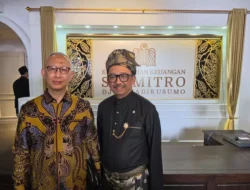
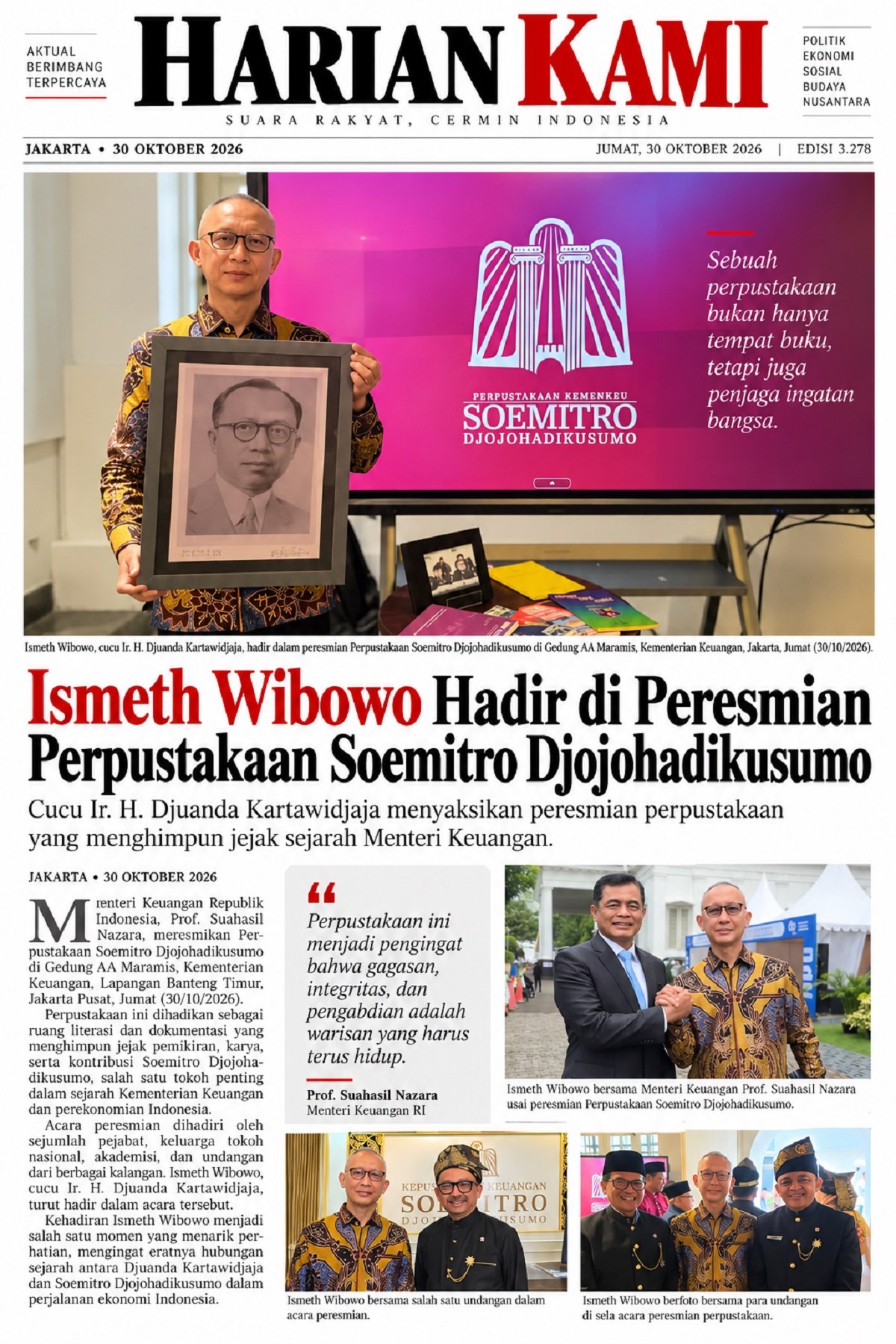
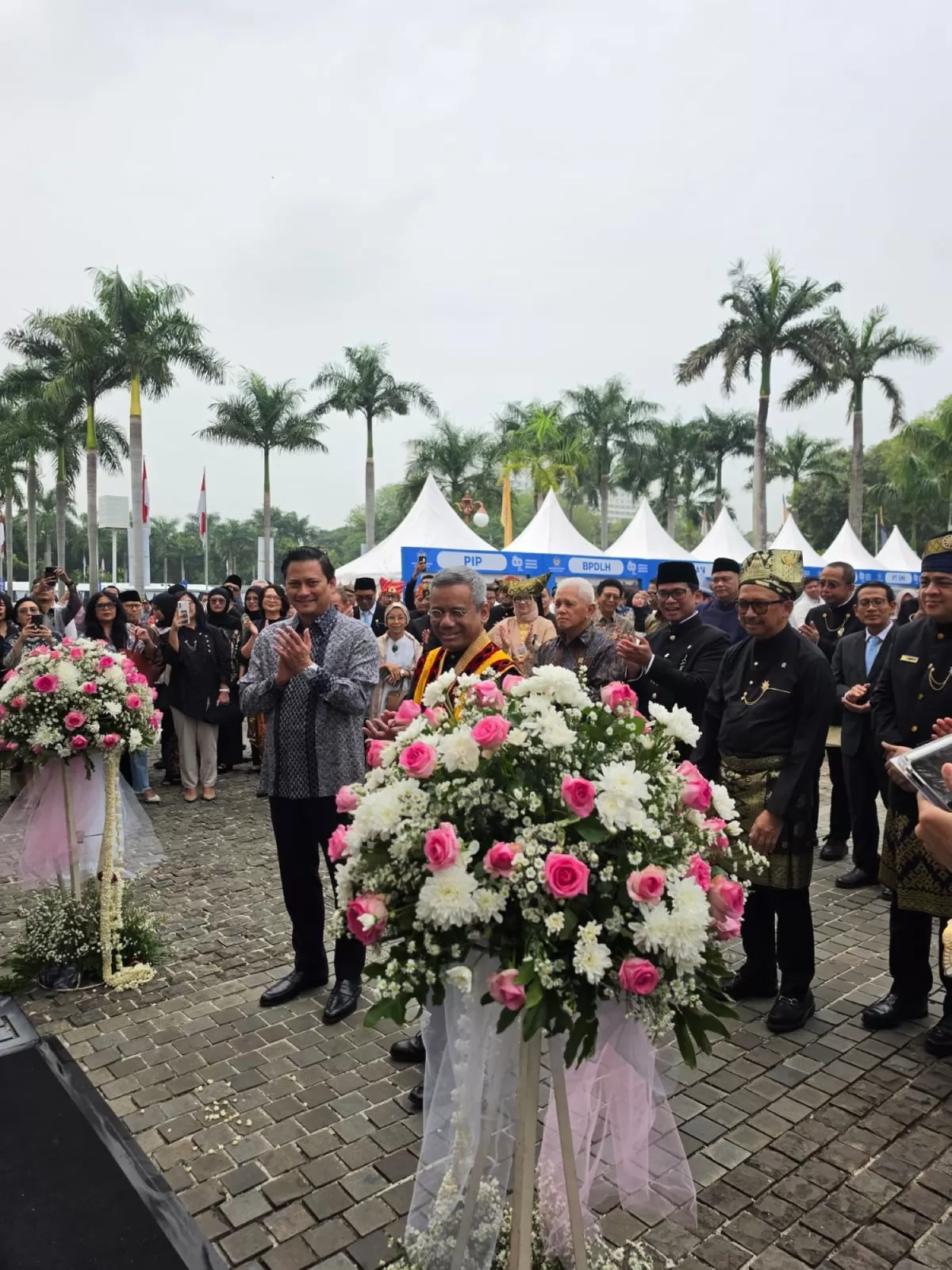
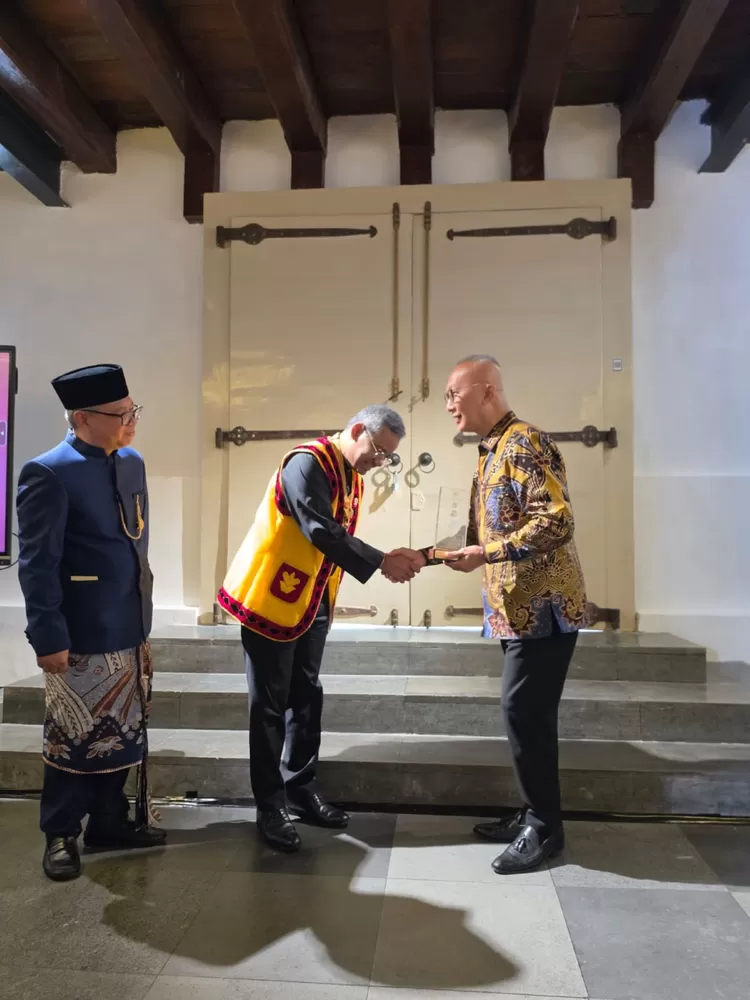
Finance Minister Suahasil Nazara inaugurated the Soemitro Djojohadikusumo Library at the Finance Ministry’s AA Maramis Building in Central Jakarta on Friday, marking an effort to preserve the intellectual legacy of figures who helped shape Indonesia’s economic and financial institutions.
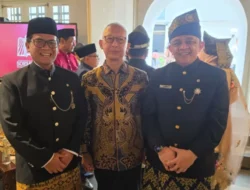
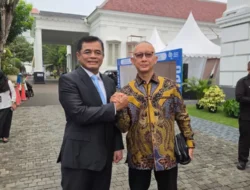
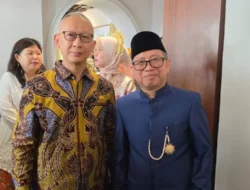
The inauguration brought together senior government officials, Finance Ministry leaders and descendants of former finance ministers, highlighting the importance of maintaining institutional memory across generations.
Among those attending were Deputy Finance Ministers Juda Agung, Luky Alfirman and Nurkholisoh Ibnu Aman, as well as Bank Indonesia Deputy Governor Thomas Djiwandono, a grandson of the late economist Soemitro Djojohadikusumo and a nephew of President Prabowo Subianto.
Also present were Presidential Advisory Council Deputy Chair Hatta Rajasa, Finance Ministry Secretary-General Astera Primanto Bhakti, Customs and Excise Director-General Djaka Budhi Utama, and State Assets Director-General Evita Manthovani.
The gathering included relatives of several former finance ministers, among them Ria Prawiro, daughter of Radius Prawiro; Data Ali Wardhana, son of Ali Wardhana; and Ati Bambang Subianto, daughter of Bambang Subianto. Representatives of the families of former ministers A.A. Maramis, Sjafruddin Prawiranegara, J.B. Sumarlin, Mar’ie Muhammad and Frans Seda also attended.
Ismeth Wibowo, a grandson of former prime minister and statesman Djuanda Kartawidjaja, was among the guests.
Preserving institutional memory
Ismeth said the library should serve a purpose beyond storing books, becoming a repository of institutional memory that documents the evolution of economic thinking and financial policymaking in Indonesia.
He said preserving the ideas and experiences of former finance ministers would help future generations understand how national policies were formulated, how successive governments responded to economic challenges and how earlier ideas could inform contemporary policymaking.
“The library also opens up opportunities for future generations to learn about the thinking and ideas of former finance ministers, as well as those of the current finance minister, Prof. Suahasil Nazara,” Ismeth said.
The collection includes general reference books, publications related to finance ministers, special collections and a mini archive documenting aspects of the ministry’s institutional history.
The library is expected to serve civil servants, researchers, students and members of the public seeking to understand Indonesia’s fiscal policy and the development of its economic institutions.
For the Finance Ministry, the initiative reflects the view that the intellectual contributions of previous generations remain relevant to contemporary debates over economic management, public spending and national development.
Djuanda’s legacy in state-building
Ismeth also recalled the career of his grandfather, Djuanda Kartawidjaja, who held several senior government positions during Indonesia’s formative years.
Djuanda served as finance minister, defense minister, transportation minister and public works minister. He also held the positions of prime minister and first minister, and served as acting president during the administration of President Sukarno.
Beyond his government appointments, Djuanda contributed to the development of national institutions. He was involved in the establishment of the National Development Planning Agency (Bappenas), served as the first president director of the national railway company, and became the inaugural chairman of the Indonesian Engineers Association and the Indonesian Motor Association.
He also served as secretary-general of Paguyuban Pasundan and headed SMA Muhammadiyah Jakarta.
According to Ismeth, Djuanda’s career illustrated the combination of technical expertise, public leadership and national vision required to build a newly independent state.
Ismeth also recalled that Notohamiprojo, Djuanda’s brother-in-law, succeeded him as finance minister.
Djuanda’s name remains prominently associated with the Finance Ministry, with its main building named in his honor. The building continues to host important official activities, including ministerial handover ceremonies.
Soemitro and Indonesia’s economic foundations
The library is named after Prof. Dr. Soemitro Djojohadikusumo, one of Indonesia’s leading economists, whose contributions helped shape the country’s economic policy during its early post-independence period.
Soemitro served as finance minister in the Wilopo Cabinet from 1952 to 1953 and again in the Burhanuddin Harahap Cabinet from 1955 to 1956.
Djuanda, meanwhile, served as finance minister in the Working Cabinet from 1959 to 1960 and the second Working Cabinet from 1960 to 1962.
Both men belonged to a generation of leaders tasked with building economic institutions and strengthening the state’s fiscal capacity amid limited resources and considerable political and economic uncertainty.
By naming the library after Soemitro, the ministry has created a space to preserve and revisit the ideas of an economist whose work formed part of Indonesia’s early efforts to define its economic direction.
The library could also provide a reference point for discussions on fiscal governance, economic development and the evolution of public financial management.
From national currency to economic sovereignty
The inauguration coincided with the Finance Ministry’s commemoration of the 80th anniversary of the Republic of Indonesia’s currency, known as Hari Oeang Republik Indonesia (HORI), and the 98th anniversary of Youth Pledge Day.
Earlier that day, Suahasil attended the commemorative event, which carried the theme “A Sovereign Indonesia, a Strong State Budget.”
He emphasized the ministry’s commitment to strengthening the state budget, known as the Anggaran Pendapatan dan Belanja Negara (APBN), to support economic growth, protect the public and maintain fiscal credibility.
The anniversary of Indonesia’s currency carries particular historical significance. On Oct. 30, 1946, the Oeang Republik Indonesia (ORI) began circulating as a national currency, symbolizing the sovereignty of a newly independent country.
The introduction of the ORI was more than a monetary measure. It demonstrated Indonesia’s determination to establish its own financial instruments and exercise greater control over its economic affairs amid political and economic instability.
An inscription commemorating the currency’s history captures the spirit behind the initiative: “From the spirit of independence emerged the Oeang Republik Indonesia. A sign that this nation was not merely free to stand, but also sovereign to determine its own destiny.”
Suahasil said the challenges facing Indonesia’s economy today differed from those confronting the country in its early years of independence. Nevertheless, the fundamental responsibility of the state remained unchanged.
“Now, 80 years later, the challenges we face have changed. Yet the struggle remains the same. Economic and financial sovereignty is not merely about having our own currency and financial institutions, but also about the state’s ability to use all its instruments to build an advanced, just and prosperous society,” Suahasil said.
He added that a strong state budget would give Indonesia greater room to determine its own development priorities while safeguarding national interests amid global changes.
“The state must be able to finance development, maintain public services and protect its people. A strong state budget gives Indonesia the space to determine its own priorities and safeguard national interests amid global changes,” he said.
Connecting the past with future policy
The simultaneous commemoration of the currency anniversary and the library’s inauguration brought together two dimensions of Indonesia’s financial history: the intellectual contributions of earlier generations and the responsibilities facing today’s policymakers.
The historical experience of Indonesia’s early independence suggests that financial sovereignty extends beyond issuing a national currency or establishing financial institutions. It also depends on the state’s ability to manage public resources responsibly, maintain credible policies and sustain public confidence.
As Indonesia faces changing global economic conditions, the experience of earlier policymakers offers a historical perspective on the continuing challenges of fiscal management and national development.
The Soemitro Djojohadikusumo Library is intended to keep that experience accessible—not simply as a record of the past, but as a source of knowledge for future generations.
Its significance will ultimately depend on how effectively the collection is preserved, developed and used to inform research, public understanding and the next generation of economic policymaking.