IndonesianTalk.com –– Thirty Years After Kudatuli, Scholar Warns Against the Return of Authoritarian Patterns
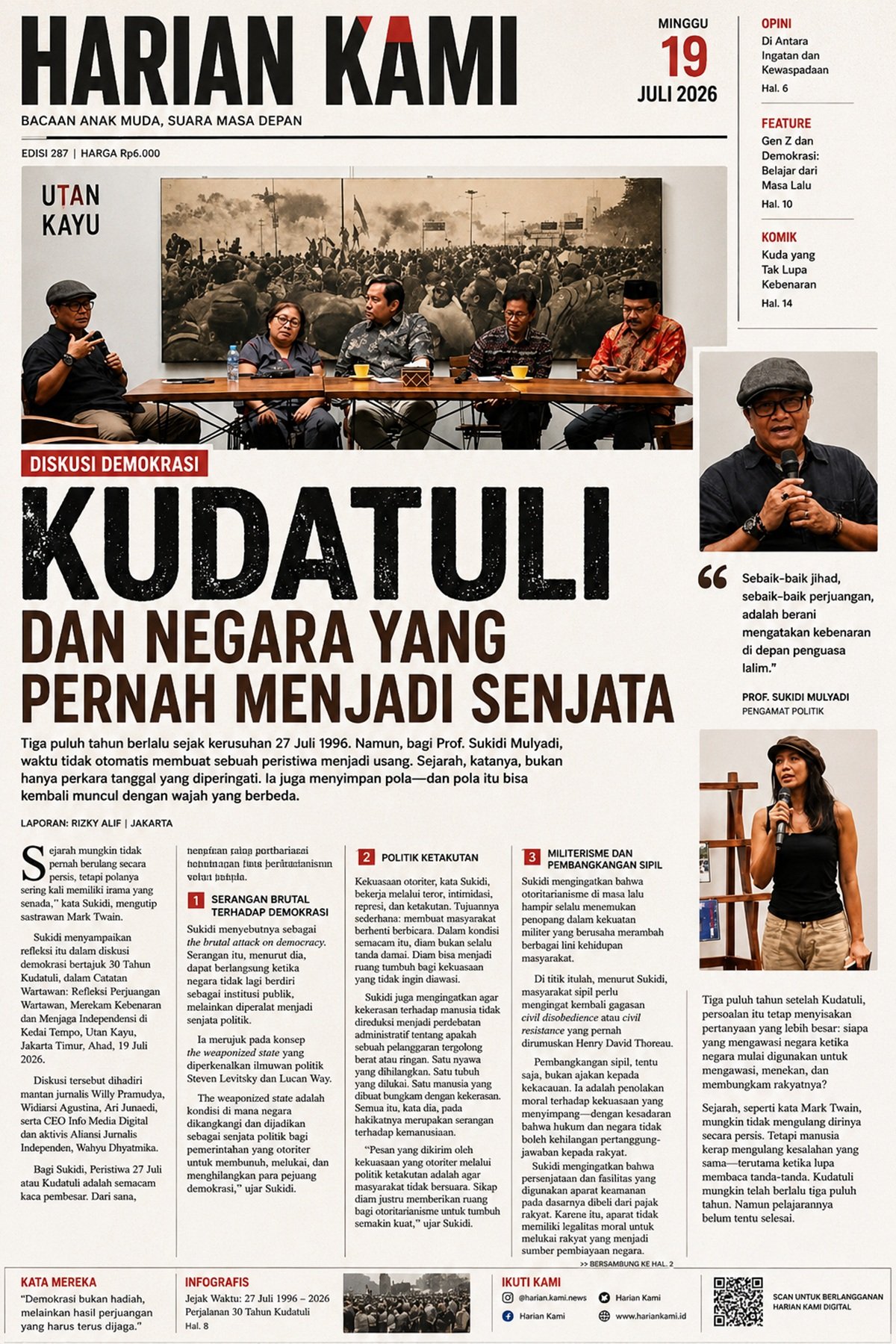
JAKARTA – Three decades after the violent July 27, 1996 attack on the Indonesian Democratic Party (PDI) headquarters, widely known as the Kudatuli incident, political philosopher Prof. Sukidi Mulyadi says the episode should not be viewed merely as a historical milestone but as a continuing lesson on the fragility of democracy.
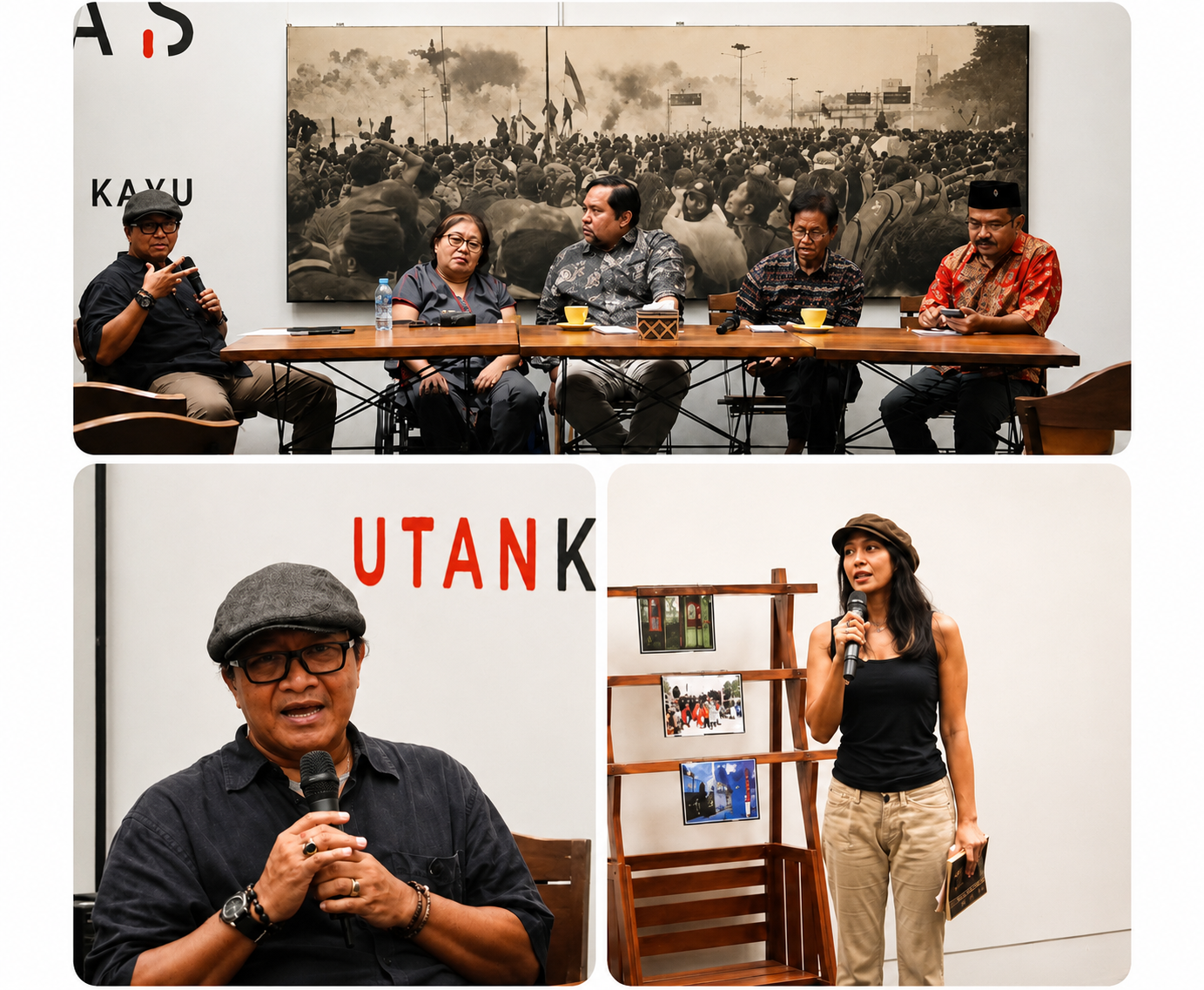
“History may not repeat itself exactly, but its patterns often rhyme,” Sukidi said, borrowing a phrase commonly attributed to American writer Mark Twain, during a democracy forum commemorating the 30th anniversary of Kudatuli at Kedai Tempo in East Jakarta on Sunday.
The discussion, titled Thirty Years of Kudatuli: Journalists’ Reflections on Recording Truth and Defending Independence, brought together former journalists Willy Pramudya, Widiarsi Agustina and Ari Junaedi, alongside Info Media Digital CEO and Alliance of Independent Journalists (AJI) activist Wahyu Dhyatmika.
For Sukidi, Kudatuli remains a defining lens through which Indonesians can examine how authoritarianism operates and how civil society should respond when democratic space begins to shrink.
The “weaponized state”
The first lesson, he argued, concerns what he described as a “brutal attack on democracy.”
Drawing on the concept of the weaponized state developed by political scientists Steven Levitsky and Lucan Way, Sukidi said authoritarian governments often transform state institutions into political instruments to silence dissent.
“The weaponized state is a condition in which the state is turned into a political weapon by an authoritarian government to kill, injure or eliminate those fighting for democracy,” he said, according to a press release issued by the Indonesian Democratic Party of Struggle (PDI-P).
Such a state, he added, does not necessarily rely on military force. Laws, law enforcement agencies, bureaucracy, propaganda and other state institutions can also be employed to suppress political opponents and critical voices.
Rather than disappearing with time, Sukidi said, authoritarian practices tend to evolve and adapt to changing political circumstances.
Politics of fear
The second lesson concerns what he called the politics of fear.
Authoritarian power, he said, thrives on intimidation, repression and terror designed to discourage citizens from speaking out.
Silence, he argued, should not always be mistaken for social stability.
“When people stop speaking because they are afraid, authoritarianism finds room to grow stronger,” Sukidi said.
He also cautioned against reducing violence against citizens to technical legal debates over whether particular abuses qualify as “serious” or “minor” human rights violations.
“The loss of a single life, a single act of violence against a person, or forcing someone into silence through intimidation is, fundamentally, an assault on humanity,” he said.
Civil resistance as democratic responsibility
Sukidi’s third point focused on militarism and the importance of preserving civilian oversight.
He noted that authoritarian governments have historically relied on expanding military influence beyond security affairs into broader areas of civilian life.
When armed institutions become deeply embedded in civilian governance, he said, the line separating legitimate security functions from political power begins to erode.
In such circumstances, Sukidi argued, citizens should revisit the principle of civil disobedience, as articulated by American philosopher Henry David Thoreau.
Civil resistance, he emphasized, is not an invitation to disorder but a moral response to governments that lose accountability to the people.
He also reminded the audience that security institutions are financed by taxpayers, arguing that they therefore bear a moral responsibility to protect, rather than harm, the citizens who sustain the state.
A question that endures
Thirty years after Kudatuli, Sukidi said, the central question remains unresolved: Who holds the state accountable when the state itself becomes an instrument for monitoring, suppressing or silencing its own citizens?
He concluded his remarks by invoking a religious teaching emphasizing the moral duty to speak truth to unjust authority.
“The greatest struggle is to have the courage to speak the truth before a tyrannical ruler,” he said.
For Sukidi, the anniversary of Kudatuli is less about revisiting a tragic episode than about recognizing recurring warning signs. History, he argued, may never repeat itself in identical form, but societies often repeat the same mistakes when they fail to recognize familiar patterns before it is too late.
source: https://www.hariankami.com/berita-kami/23617393919/30-tahun-kudatuli-dalam-catatan-wartawan