
INDONESIANTALK.com — The State, the Mines, and the Return of Economic Nationalism.
By Dr. Eko Wahyuanto
Indonesia may be approaching one of the most consequential economic policy shifts since the Reformasi era.
In June 2026, coinciding with the commemoration of Pancasila Day, the government is expected to issue a presidential regulation establishing a “single-gate” export system for natural resources — a mechanism designed to centralize and tighten state control over commodity exports.
At first glance, the policy appears administrative: an effort to simplify customs procedures and reduce leakage. But beneath the bureaucratic language lies a far larger political ambition.
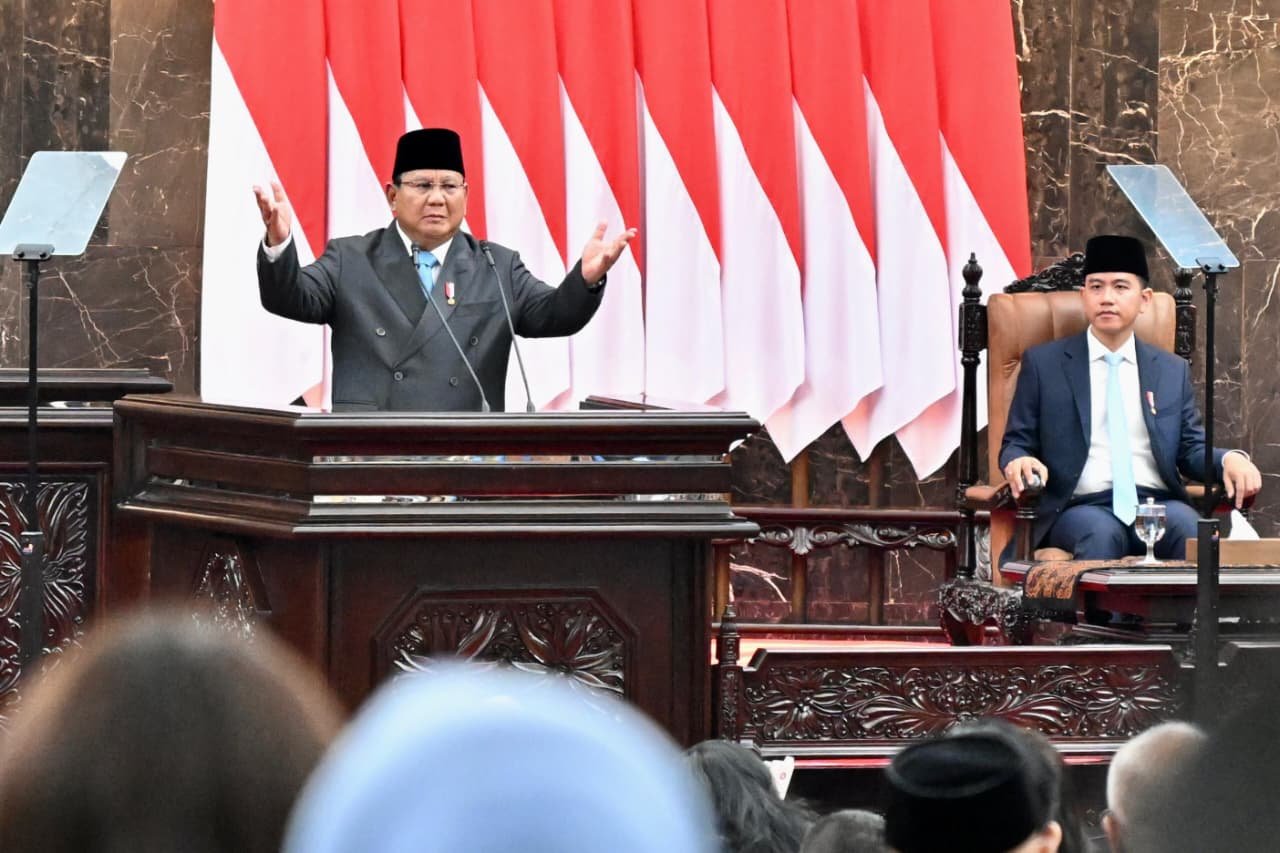
President Prabowo Subianto seems intent on redefining the relationship between the Indonesian state, its natural resources, and the global market.
For decades, Indonesia’s mineral wealth has flowed outward through a system vulnerable to manipulation. Coal, nickel, bauxite, copper, and palm oil generated enormous profits, yet much of the financial benefit escaped the national economy.
Export discrepancies, underreported cargo volumes, transfer pricing schemes, and tax engineering became part of a structural problem long tolerated by successive administrations.
The government now frames this not merely as an economic inefficiency, but as a sovereignty issue.
That distinction matters.
The proposed one-door export policy reflects a growing belief within Jakarta that resource nationalism is no longer ideological nostalgia, but geopolitical necessity.
In a world shaped by supply-chain wars, strategic minerals, and economic fragmentation, control over raw materials has become a form of strategic power.
Indonesia possesses some of the world’s largest reserves of critical minerals. Yet the paradox has persisted: the country rich in resources often remains weak in bargaining position.
The state extracts royalties, companies extract profits, but downstream value — technological, industrial, and financial — frequently accumulates elsewhere.
This is where the new policy seeks to intervene.
The regulation would reportedly centralize export control through a state-supervised mechanism, supported by digital monitoring systems tracking commodities from mining sites to ports.
Verification of cargo volumes, standardized pricing benchmarks, and tighter fiscal clearing systems are intended to reduce loopholes that have long enabled illicit practices.
More importantly, the state aims to reposition itself not simply as regulator, but as strategic market actor.
The article invokes Article 33 of the 1945 Constitution, which declares that land, water, and natural resources are to be controlled by the state for the prosperity of the people.
In Indonesian political history, that clause has always carried dual meanings: legal authority and moral obligation. The challenge has never been constitutional language. It has been implementation.
Critics, of course, will warn against over-centralization. They will question whether a state-controlled export architecture risks inefficiency, rent-seeking, or the creation of new monopolies.
Those concerns are not trivial. Indonesia’s history offers many examples where noble economic nationalism devolved into bureaucratic patronage.
Yet supporters argue the opposite risk is even greater: allowing fragmented commodity exports to remain vulnerable to global speculation, domestic oligarchic interests, and opaque offshore pricing structures.
The government appears to believe that the era of passive economic management is over.
One intriguing aspect of the proposal is the role envisioned for Danantara, the state investment management body expected to anchor this transformation.
The concept resembles, at least rhetorically, models used by resource-rich countries such as Chile, where state involvement in copper exports through Codelco significantly strengthened national bargaining power.
Indonesia’s version, however, would operate on a far larger and more politically sensitive scale.
The timing is equally significant. Around the world, countries are rediscovering industrial policy and economic nationalism. The United States subsidizes strategic industries. China secures mineral supply chains.
Europe talks about “economic security.” In that global climate, Indonesia’s attempt to consolidate control over its commodity exports no longer looks exceptional. It looks aligned with a broader international trend.
The deeper question is whether the state can convert resource control into public welfare.
The government argues that recovering export leakages could finance social programs, including President Prabowo’s flagship free nutritious meals initiative, without overburdening the state budget.
If managed transparently, such revenue could indeed strengthen industrialization, education, and infrastructure.
But history offers a cautionary lesson: resource nationalism succeeds not because the state controls commodities, but because institutions remain accountable.
Without transparency, centralized systems merely relocate corruption rather than eliminate it.
Still, politically, the symbolism is powerful. The administration is attempting to revive an old Indonesian idea in modern form: that sovereignty is not complete if a nation cannot control the economic destiny of its own resources.
In the end, the debate surrounding the single-gate export regulation is larger than trade policy. It is about the unfinished argument at the heart of Indonesian development since independence: who truly benefits from the wealth beneath the soil.
And in that sense, this may indeed become the defining economic battle of the Prabowo era.
Jual Majalah MATRA INDONESIA / MAY 2026 Karya MATRA INDONESIA