IndonesianTalk.com — HarianKami Leaders Attend Police General Chaidir’s Doctoral Promotion at STIK
The morning unfolded with quiet solemnity in Kebayoran Baru. Applause, when it came, was measured—less a celebration than a restrained acknowledgment of a long intellectual journey reaching its culmination.
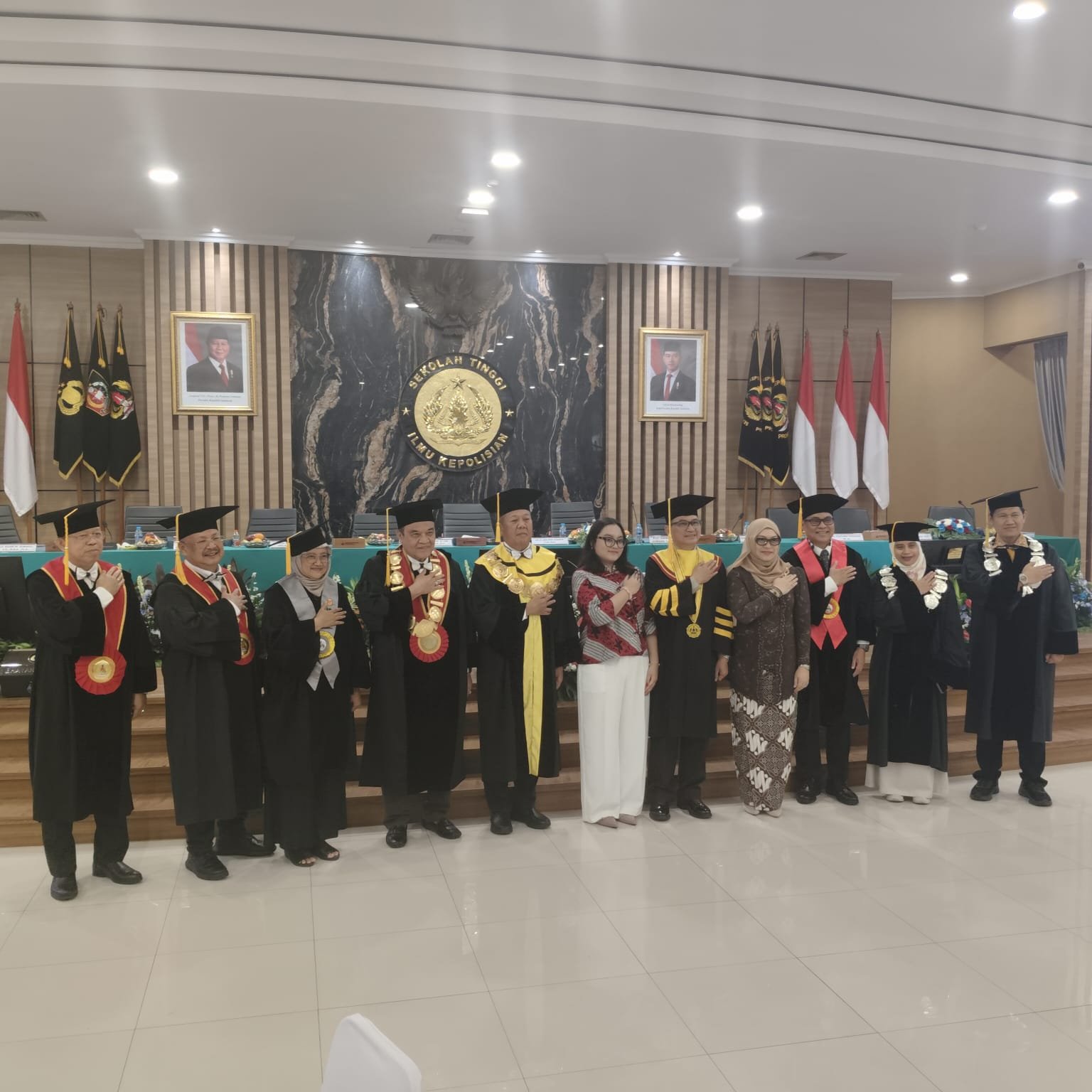
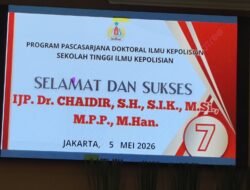
At the Bhadawa Building of the Police Science College (STIK) on Tuesday, May 5, 2026, Inspector General Dr. Chaidir officially earned his doctorate in police science, marking a significant milestone in both his academic and professional career.
His name is simple—Chaidir. His titles, however, are extensive: SH, S.I.K., M.Si., M.P.P., M.Han. Together, they reflect a career shaped by both practice and study, in the field and in the classroom.
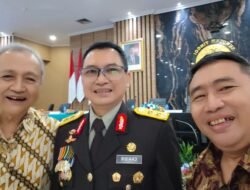
The open doctoral session was attended by leaders of HarianKami, underscoring the event’s broader relevance beyond academic circles. It was not merely a ceremonial proceeding, but a moment that bridged scholarship, statecraft, and law enforcement.
Chaidir’s dissertation addressed a complex and increasingly urgent issue: international police cooperation in combating transnational organized crime. Titled International Police Cooperation between Indonesia and Malaysia in Tackling Transnational Organized Crime, the research explores the dynamics of cross-border collaboration in an era where crime, like commerce, moves fluidly across national boundaries.
The topic is far from theoretical for Chaidir. A former police attaché in Malaysia, he has firsthand experience navigating the intricacies of bilateral law enforcement cooperation.
That practical insight was evident throughout his defense—his arguments grounded not only in theory but also in lived institutional realities.
Before a panel of examiners comprising academics and senior police officials, Chaidir presented his work with composure and clarity. His delivery was steady, almost uninterrupted, reflecting a familiarity with the subject that comes from years of engagement.
At the promoters’ table, his lead supervisor offered a reminder that resonated beyond the room: that a dissertation should not become a “tombstone project”—a final intellectual act, but rather the beginning of a continuing contribution.
The message, though delivered in the understated tone typical of academia, carried weight. A doctoral degree, it suggested, is not an endpoint but a mandate—an obligation to keep questioning, researching, and contributing.
Other examiners echoed similar sentiments. Some focused on the substance of the research, others on the attitude expected of a scholar-practitioner. Nearly all converged on a shared message: remain grounded, and ensure that knowledge translates into impact.
In the hierarchical world of policing, where command structures often dominate, such reminders of humility and intellectual responsibility felt particularly significant.
Chaidir passed with an A grade, earning the distinction of highly satisfactory. Yet the numbers seemed secondary to the trajectory that led him there.
In addition to his policing career, Chaidir now serves as an expert instructor in law and human rights at the National Resilience Institute. The role requires navigating the delicate balance between state security and civil liberties—between authority and accountability.
His dissertation reflects a similar effort: to bridge national interests with the demands of international cooperation. In the context of Indonesia–Malaysia relations—often complex and occasionally strained—police collaboration emerges as a pragmatic space where shared concerns can outweigh political differences.
The session began at 9 a.m. and proceeded with formal precision. The panel of examiners was extensive, reflecting the rigor of the process. There were no surprises, only the steady progression of academic ritual.
It was, in essence, the story of a senior officer returning to the discipline of study—writing, questioning, and reexamining years of professional experience. And ultimately, defending those reflections before a forum not easily convinced.
At the close of the session, the doctoral title was formally conferred. Photographs were taken. Congratulations followed.
But as his promoter had cautioned, the title does not conclude the story.
If anything, it marks the beginning of a new chapter—one in which a police general must also live as a scholar: thinking more deeply, speaking more carefully, and, perhaps, contributing more broadly than any rank alone could demand.