IndonesianTalk.com — Maung Turns Heads at ASEAN Summit in Cebu. By Dr. Eko Wahyuanto
The 48th ASEAN Summit in Cebu, the Philippines, concluded with an unexpected diplomatic spectacle from Indonesia — one that drew attention not through speeches alone, but through the arrival of a vehicle that symbolized the country’s growing industrial ambition.
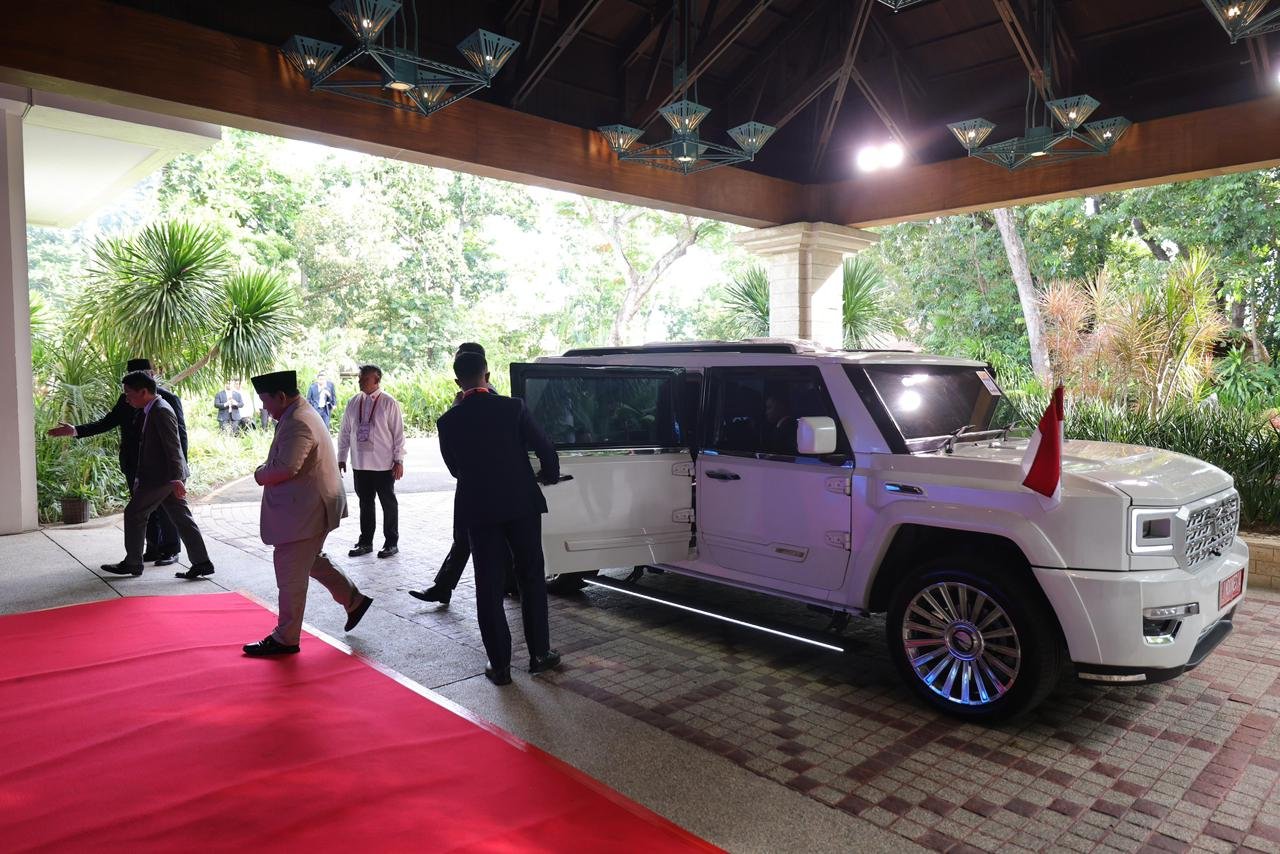
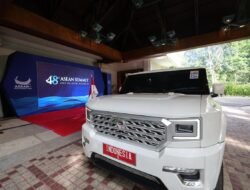
President Prabowo Subianto attended the regional gathering not in the customary imported limousine often associated with world leaders, but in Indonesia’s domestically produced tactical vehicle, the Maung.
The decision was widely interpreted as more than a logistical choice. It was a deliberate political statement: Indonesia’s defense industry is no longer merely aspiring to grow — it is ready to present itself on the international stage.
As the Maung rolled through the protocol roads of Cebu, the vehicle quickly became a public attraction. Amid convoys dominated by European luxury sedans, the Indonesian-made tactical car stood out with its muscular silhouette, sharp body lines, and matte-finished exterior that projected both strength and modernity.
Crowds gathered along delegation routes to catch a glimpse of the vehicle, while local media and social media users praised what many viewed as a bold display of national confidence.
Although visually imposing, the presidential version of the Maung has undergone extensive modifications to meet VVIP security standards. The cabin was redesigned for ergonomic comfort, a notable departure from the rigid interiors commonly associated with military tactical vehicles.
The appearance of the Maung in Cebu also represented a form of industrial diplomacy. Produced by PT Pindad, the vehicle showcased Indonesia’s determination to strengthen domestic manufacturing capabilities, particularly in the defense sector.
President Prabowo has repeatedly emphasized that Indonesia should not remain merely a market for foreign products, but become an important player within global supply chains. Bringing the Maung to an international summit reinforced that message in visible and symbolic fashion.
The vehicle’s presence also carried broader geopolitical implications. It reflected Indonesia’s attempt to reduce dependence on imported defense equipment while building technological self-reliance — a strategic objective increasingly emphasized by the government.
For many Indonesians, the Maung represents more than transportation. It has become a symbol of local engineering capability and the growing confidence of the country’s young industrial workforce in designing products that meet international standards.
During the summit, the Maung accompanied President Prabowo through several key diplomatic engagements, including discussions on strengthening ASEAN regional integration and accelerating cooperation under the Brunei Darussalam–Indonesia–Malaysia–Philippines East ASEAN Growth Area (BIMP-EAGA).
Symbol of a Rising Asian Power
The Maung’s appearance in Cebu sparked a wave of pride across Indonesian social media, where users celebrated the vehicle as evidence that local products could compete on the global stage.
Its symbolism extends beyond manufacturing. The name “Maung,” derived from the Sundanese word for tiger, evoked the imagery of a resurgent “Asian Tiger” — a nation seeking to combine economic growth, technological independence, and national identity.
Indonesia’s government has signaled that the Maung is only part of a broader strategy to promote domestic industrial products internationally. Other state-linked manufacturers, including PT PAL Indonesia and PT Dirgantara Indonesia, are also expected to play larger roles in the country’s long-term industrial ambitions.
The government has additionally encouraged the development of environmentally friendly variants, including electric tactical vehicles, as part of Indonesia’s future automotive roadmap.
Seen from this perspective, the Maung’s journey to Cebu was not merely another overseas presidential trip. It was a carefully staged display of Indonesia’s industrial aspirations.
Leaders and National Vehicles
History offers many examples of world leaders using domestically produced vehicles as instruments of political symbolism and diplomatic messaging.
Former French President Charles de Gaulle famously relied on the Citroën DS, which became a symbol of French engineering excellence. Its reputation soared globally after surviving the 1962 Petit-Clamart assassination attempt, when the vehicle reportedly remained stable despite severely damaged tires.
Likewise, former U.S. President Richard Nixon frequently traveled in the Lincoln Continental during state visits, including his historic 1972 trip to China. The use of American-made presidential vehicles projected the industrial strength and logistical self-sufficiency of the United States during the Cold War era.
By bringing the Maung to Cebu, President Prabowo appeared to follow a similar path — using a national vehicle not only for transportation, but also as an extension of diplomacy itself.
Looking Ahead
The international attention received by the Maung, however, must be matched by stronger support for Indonesia’s broader industrial ecosystem. Sustained collaboration between government institutions, universities, and manufacturers will be crucial if Indonesia hopes to maintain long-term technological competitiveness.
Optimism surrounding the Maung reflects a wider aspiration: that Indonesia can eventually become known not only as a consumer market, but also as an exporter of high-value industrial products.
For supporters of the country’s industrial transformation agenda, the Maung is therefore more than a tactical vehicle. It is a declaration that Indonesian-made technology can stand confidently on the global stage.
In Cebu, that declaration arrived not in words, but on four wheels.