IndonesianTalk.com — Indonesia Incorporated and the Vision of an Economic Leap
- By Aditya Laksmana Yudha (Senior Economic Journalist)
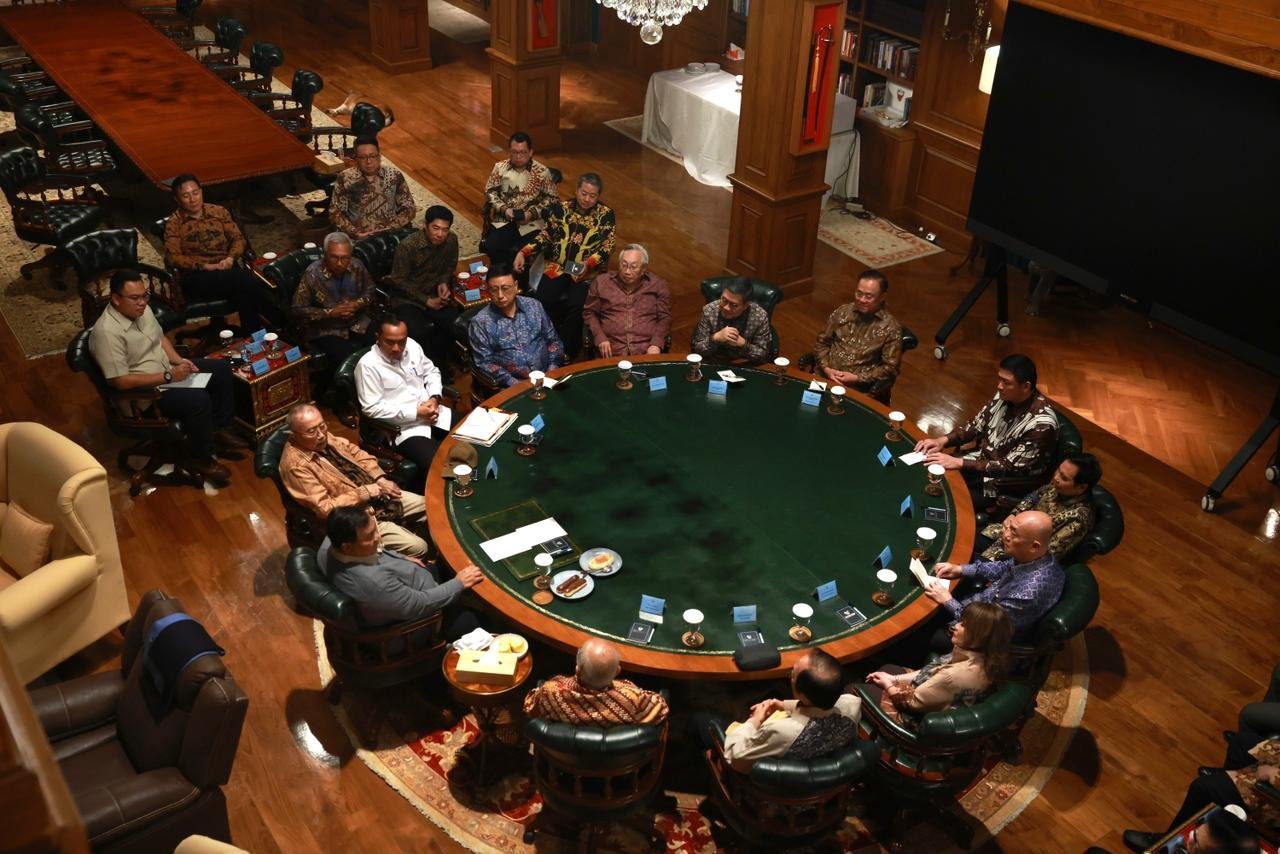
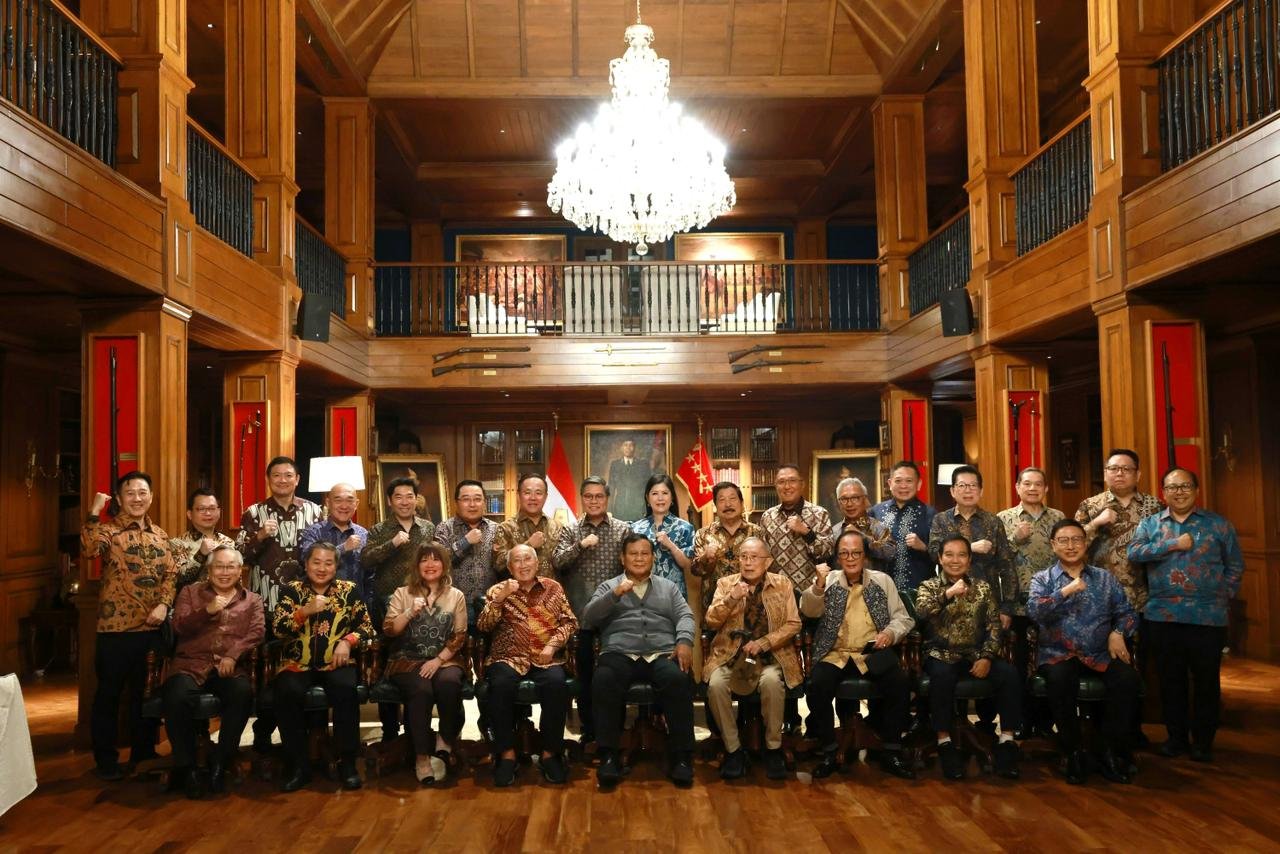
President Prabowo Subianto’s meeting with the Indonesian Employers Association (APINDO) at his residence in Hambalang, Bogor, on Feb. 9, 2026, was far more than a routine dialogue between the head of state and business leaders.
The nearly three-hour discussion carried a deeper political and economic message: a serious call to build what the President has termed Indonesia Incorporated.
This concept represents a paradigm shift toward national collaboration, bringing together the state, the private sector and society at large to pursue high, inclusive and sustainable economic growth.
It signals an ambition to move beyond fragmented policymaking toward a more integrated national economic strategy.
During the meeting, President Prabowo was accompanied by State Secretary Prasetyo Hadi, Cabinet Secretary Teddy Indra Wijaya, and Deputy Minister of Communication and Digital Affairs, who also serves as Head of the Government Communication Agency, Angga Raka Prabowo.
Their presence underscored the administration’s intent to align political leadership, policy coordination and strategic communication.
Entrepreneurs as Strategic Partners
The open and dialogic atmosphere of the meeting reflected President Prabowo’s leadership style—one that seeks direct input from business actors.
This is where the strategic meaning of the gathering becomes evident. The business community is no longer treated merely as an object of policy, but as an active partner in national development.
The state does not walk alone, nor is the market left to operate without direction.
The Indonesia Incorporated concept emphasizes the need to unify the vision of all national stakeholders.
Government institutions, private enterprises, state-owned companies, micro, small and medium enterprises (MSMEs), the financial sector and educational institutions are expected to move within a single grand orchestration.
Like a national corporation, Indonesia requires a shared objective, a clear division of roles and firm yet adaptive leadership. Without these elements, aspirations for high economic growth will remain elusive.
The administration’s target of achieving 8 percent economic growth by 2029 is not mere rhetoric.
With national growth recorded at 5.11 percent in 2025, reaching that level will require a fundamental change in how the economy operates.
Business as usual will no longer suffice. What is needed is accelerated investment, higher productivity, value-added industrialization and, most importantly, large-scale job creation.
Labor-Intensive Sectors at the Core
In this context, the role of entrepreneurs becomes crucial. President Prabowo explicitly invited APINDO and business leaders to take an active role in job creation within the real sector.
Industries such as textiles, garments, footwear and furniture were once again highlighted as strategic priorities.
This focus is well grounded. These sectors are labor-intensive, possess extensive supply chains and are capable of absorbing large numbers of workers, including those with middle- and lower-level education. Revitalizing them is essential for inclusive growth.
Beyond manufacturing, serious attention is also being directed toward food and beverages, fisheries, livestock and MSMEs. These sectors are not only pillars of domestic economic resilience but also key to food security and inflation control.
Within the Indonesia Incorporated framework, strengthening these sectors means reinforcing the national economic foundation from the bottom up, rather than relying excessively on financial growth or raw commodity exports.
APINDO’s stated commitment to fully support the President’s vision deserves recognition.
This support extends beyond growth figures to broader welfare goals, including poverty alleviation, adequate nutrition and quality education for all Indonesian children. This is the defining line between superficial growth and development that is meaningful and inclusive.
Economic growth without equitable distribution will only widen inequality. Conversely, industrialization that prioritizes domestic value creation can generate jobs, raise incomes and strengthen purchasing power.
When businesses actively engage in social agendas such as nutrition and education, human capital development becomes a shared responsibility rather than the sole burden of the state.
Redefining State–Business Relations
The Indonesia Incorporated paradigm also requires a recalibration of relations between the government and the business community.
The state must provide legal certainty, simplified regulations and a conducive investment climate. In return, entrepreneurs are expected to move beyond short-term profit motives and invest in productive sectors with broad social impact.
The Hambalang meeting sent a strong signal that cross-ministerial coordination will be a priority. Without a solid and responsive bureaucracy, the spirit of collaboration will quickly be stifled by procedures and sectoral ego. Indonesia Incorporated demands a bureaucracy that serves rather than over-controls.
The concept is equally relevant in responding to global challenges. Economic uncertainty, geopolitical fragmentation and slowing international trade compel Indonesia to strengthen its domestic market and industrial base.
Excessive dependence on imports and raw commodities must be reduced. Industrial downstreaming, workforce upskilling and technological innovation are no longer optional—they are necessities.
In this context, synergy between the government and the business sector is not a choice but an imperative. Businesses bring speed, efficiency and creativity. The government brings authority, policy instruments and public legitimacy.
When these forces move in the same direction, national energy can be fully consolidated. This is the essence of Indonesia Incorporated.
That said, such an ambitious vision is not without risks. Implementation remains the ultimate test. Policy consistency, oversight of unhealthy business practices and genuine support for domestic enterprises—particularly MSMEs—must be safeguarded. Without transparency and accountability, collaboration risks devolving into collusion.
President Prabowo’s dialogue with APINDO offers hope that Indonesia’s economic direction will not be shaped solely behind bureaucratic desks, but through real engagement with economic actors.
If the open and constructive spirit of the meeting can be translated into concrete policies and tangible action, Indonesia Incorporated will evolve from a slogan into a national strategy.
Ultimately, Indonesia’s ability to reach 8 percent growth by 2029 will depend on how well the nation aligns its steps. Government, business and citizens must feel that they are on the same vessel.
With a clear destination and firm leadership, prosperity will no longer be a distant dream but an achievable reality.
Indonesia Incorporated is an invitation to move beyond fragmentation, rebuild trust and work together for the nation’s future.
The meeting in Hambalang may have lasted only three hours, but if taken seriously and implemented consistently, its impact could shape Indonesia’s trajectory for decades to come.
source; https://matranews.id/presiden-menerima-audience-apindo-di-padepokan-garudayaksa-hambalang-bogor/