Indonesiantalk.com – – ARUN Jakarta Sets Sights on Bigger Role in Indonesia Emas 2045
JAKARTA — Electing a new chairperson is perhaps the easiest part of any organizational congress. The greater challenge lies in ensuring that an organization continues to have a meaningful role in society.
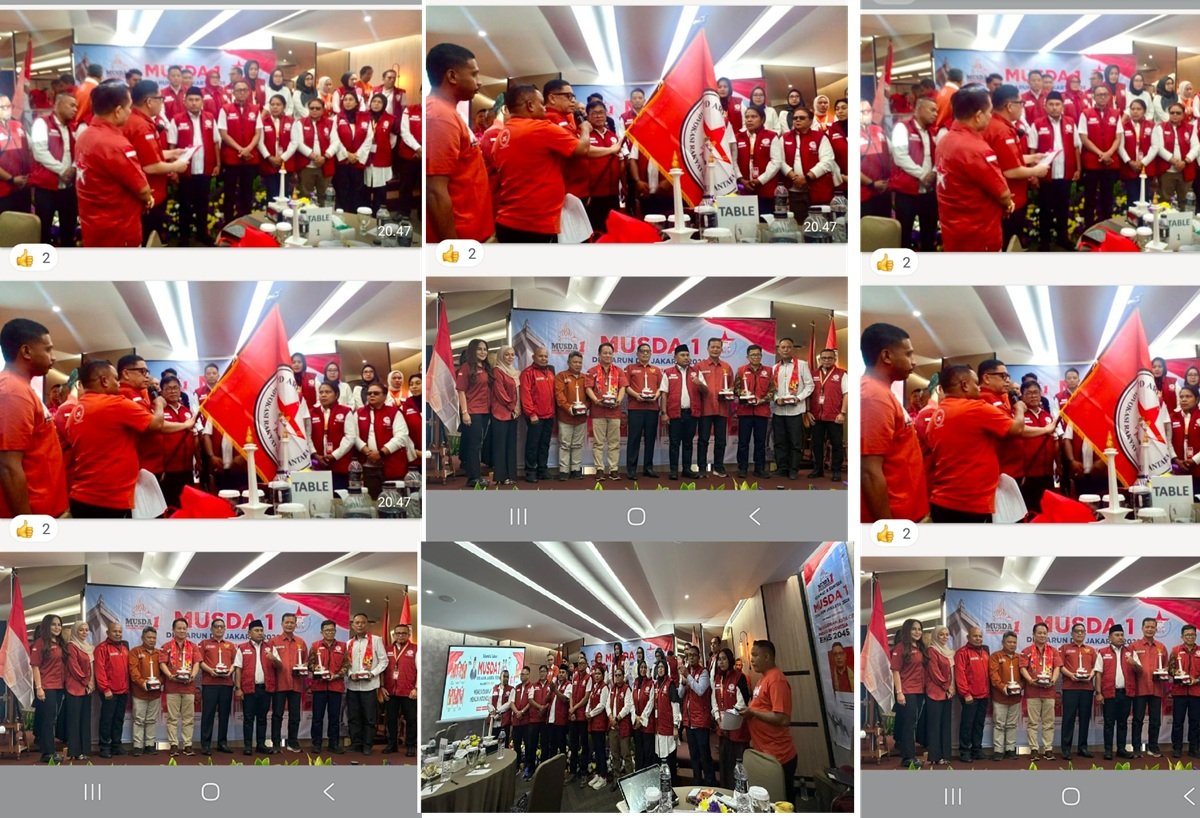
That question underpinned the first Regional Congress (Musda I) of the Jakarta chapter of Advokasi Rakyat Untuk Nusantara (ARUN), held at Gren Alia Hotel in Cikini on Saturday. While formally convened to elect the organization’s leadership for the 2025–2030 term, the gathering evolved into a broader discussion on the future role of civil society organizations amid Indonesia’s evolving political landscape and national development agenda.
Carrying the theme “Realizing Asta Cita Toward Indonesia Emas 2045,” the congress reflected ARUN’s view that the country’s long-term vision extends beyond economic growth and demographic dividends. It also requires stronger democratic institutions, legal certainty, and meaningful public participation.
Opening the congress, ARUN national chairman Dr. Bob Hasan said civil society organizations have responsibilities that go beyond representing public aspirations. They must also become constructive partners capable of contributing practical solutions to national development.
“ARUN must continue advocating for public welfare, safeguarding national political stability, and strengthening collaboration with all stakeholders in support of Indonesia Emas 2045,” he said.
Jakarta chapter chairman Faisal Sangadji echoed the message, describing the capital as more than an administrative jurisdiction. As the nation’s political center, he said, policies formulated in Jakarta inevitably shape developments across the country.
For that reason, Faisal said, ARUN seeks to position itself not merely as a critical observer but as an organization that offers policy recommendations while monitoring their implementation for the benefit of the public.
“ARUN must serve as a pillar of public advocacy and become a genuine platform for the aspirations of Jakarta’s residents,” he said.
The need for adaptation in a rapidly changing environment was highlighted by ARUN advisory board member Prof. Pujiyono. Referring to the butterfly effect, he argued that significant transformations often begin with small but consistent actions, and that organizations must evolve without losing sight of their founding principles.
“Every era has its people, and every generation has its own challenges. Change is inevitable, and collaboration is the key to creating sustainable transformation,” he said.
His remarks captured a broader theme emerging from the congress: idealism alone is no longer sufficient for civil society organizations. To remain relevant, they must also strengthen institutional capacity, expand networks, and build strategic partnerships capable of responding to increasingly complex social and political challenges.
Organizing committee chairman M. Deka S described the congress as the beginning of a longer process of institutional consolidation.
“This congress marks the starting point of a broader people’s movement focused on strengthening the rule of law and democracy. We want to create an open and solution-oriented platform involving a wide range of stakeholders,” he said.
The congress concluded by endorsing the Jakarta executive board for the 2025–2030 term and outlining organizational priorities in legal advocacy, community empowerment, youth development, and cross-sector partnerships.
Jakarta is the latest province to hold a regional congress as part of ARUN’s nationwide consolidation, following similar meetings in Central Kalimantan, Lampung, Bali, North Sumatra, South Sulawesi, Gorontalo, and Central Java.
For ARUN, however, organizational consolidation is only the first step. Its success, members acknowledged, will ultimately be measured not by the completion of its leadership structure, but by its ability to transform public aspirations into policies that are heard, debated and acted upon. In that sense, the vision of Indonesia Emas 2045 is not only about a more prosperous nation, but also about a stronger and more effective civil society.