IndonesianTalk.com — A bigger television offers something buyers can see immediately: more screen. Whether it offers better value takes a closer look.
For a household planning to replace its TV, the decision involves money set aside, space available and a device expected to serve everyday needs. An attractive upgrade has to make sense within those limits.
TCL Indonesia is making its case through the “Add a Little, Get MUCH BIGGER” campaign. In company material, the brand compares the additional cost of moving to a larger television with the increase in viewing area.
The message is straightforward. A relatively small increase in spending, TCL says, can bring a noticeably larger display.
Understanding that offer begins with two questions: how much larger, and at what final price?
More Screen, but What Else Changes?
TCL gives several examples of how screen area grows with size. Moving from a 32-inch television to a 40-inch model adds about 56 percent more viewing area. A move from 50 to 55 inches adds around 21 percent.
Those figures are consistent with the geometry of screens that share the same aspect ratio. Television sizes describe the diagonal measurement; the viewing area grows with the square of that measurement.
The numbers help explain why a few extra inches can produce a larger change than buyers might expect.
They do not, however, measure picture quality or how much more someone will enjoy watching. Those questions require a look at the specific models, their features and how they will be used.
For consumers, the useful comparison is between two complete products, including their final prices.
Putting a Price on “A Little”
Under TCL’s campaign scenarios, upgrading from 50 to 55 inches involves an estimated 10 percent additional cost. Moving from 55 to 65 inches is said to add roughly 40 percent more screen area for an estimated 15–20 percent increase in cost.
The company also describes a possible move from 43 to 50 inches at no extra charge under a campaign scenario.
The supplied material does not identify the model pairs, participating retailers, promotion dates or purchase conditions behind these comparisons.
Without those details, buyers cannot yet determine which offer applies to the television they are considering.
For a household working within a set budget, the final amount matters. A percentage becomes useful when it can be translated into a clear price and matched to a specific product.
Smaller Screens Still Have a Place
TCL’s material also acknowledges why smaller televisions remain relevant: limited space, affordability and their role as second screens.
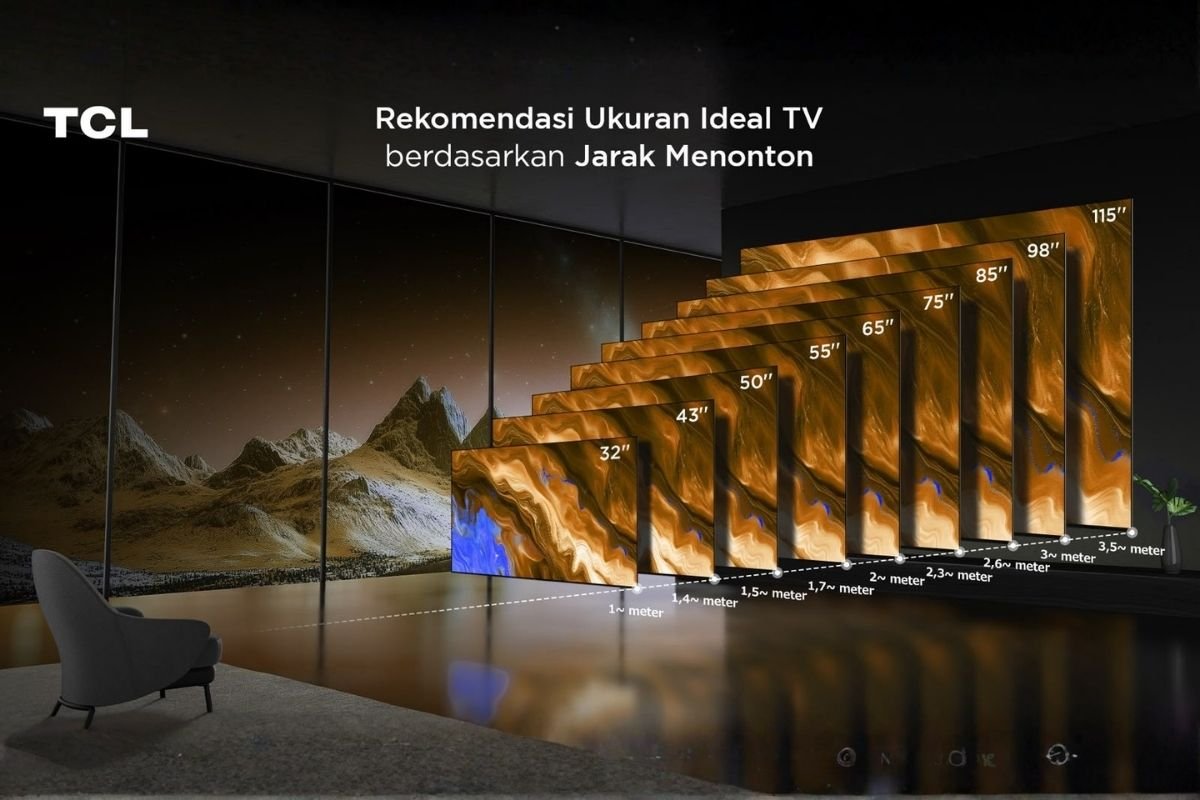
It positions 32- to 43-inch TVs as options for bedrooms, rental rooms and compact living areas. Larger models are presented as choices for viewers seeking more screen space for films, sports, gaming and family entertainment.
These uses reflect different needs. Someone furnishing a rented room may have different priorities from a household replacing its main living-room television.
That distinction matters when discussing upgrades. A screen can be larger without being a better fit for the room or the person buying it.
A worthwhile purchase starts with the problem it is meant to solve—whether that is replacing a failing device, gaining useful features or creating a larger viewing area.
A Broad Range Calls for Clear Comparisons
TCL says its Indonesian portfolio includes televisions from 43 to 115 inches. Its material also lists 4K, QLED, Mini LED and Google TV across the range.
The document does not provide a full model-by-model feature breakdown. Buyers therefore need to check which specifications belong to the product they intend to purchase.
That information helps turn a broad promise of better entertainment into something concrete: a television with known features, a clear price and a place in the home.
TCL’s campaign offers a reason to consider going bigger. The next step is to establish whether the particular upgrade is useful and affordable.
For the household making that decision, value is what the extra spending brings to everyday life.