IndonesianTalk.com — Baton Passed at Bakom: From Angga to Qodari
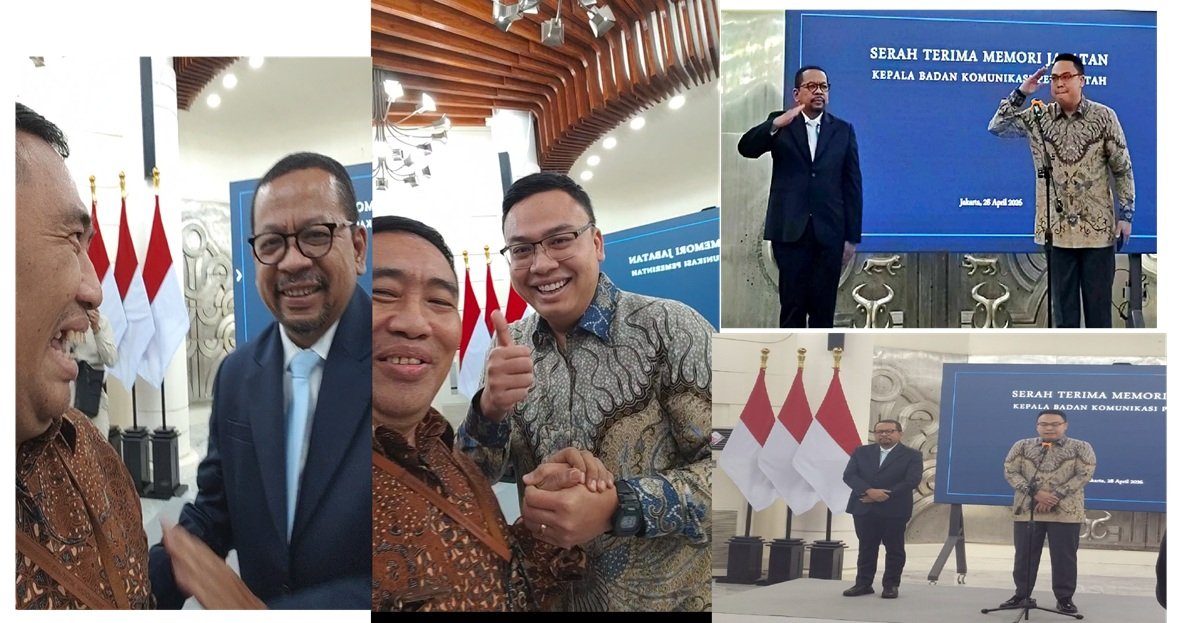
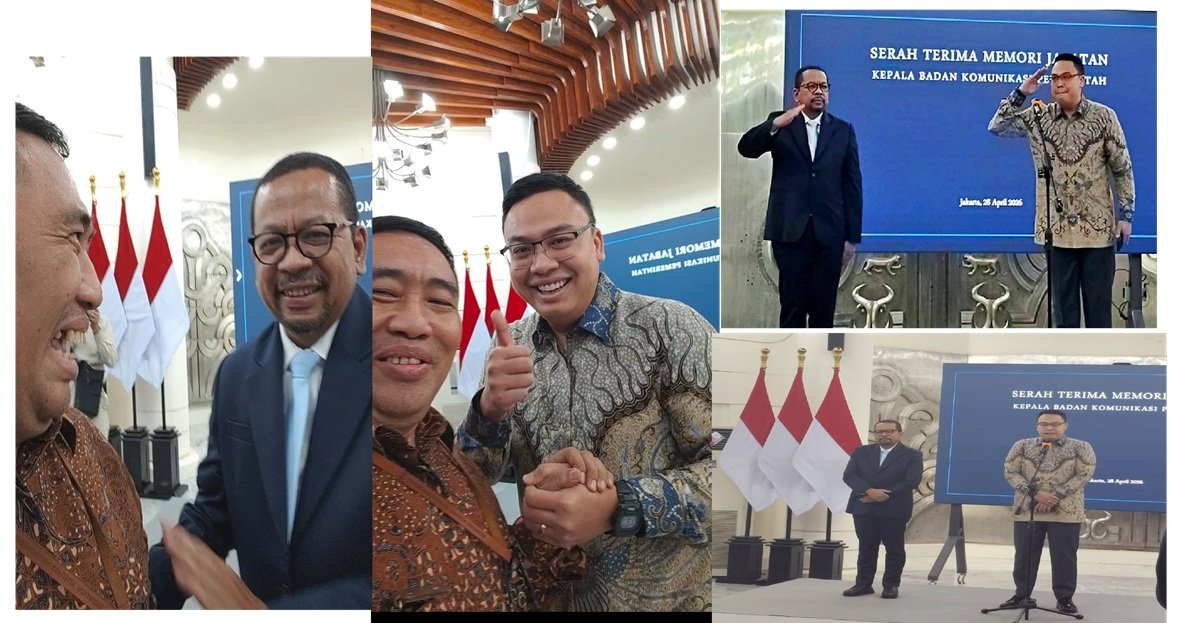
Jakarta, April 28, 2026 — A modest auditorium at Indonesia’s Government Communication Agency (Bakom) turned into a stage of transition on Tuesday morning, marking not just a formal handover but a shift in tone for an institution still defining its role.
In a ceremony that felt more familial than ceremonial, outgoing head Angga Raka Prabowo formally transferred leadership to Muhammad Qodari after seven months of laying the agency’s groundwork.
Angga struck a reflective note in his farewell remarks, choosing introspection over protocol. Addressing what he repeatedly called the “extended family” of Bakom, he expressed gratitude for a collective effort forged under constraints.
“For seven months, we have built the Government Communication Agency amid challenges and limitations,” he said, offering a succinct portrait of an institution in its formative phase.
Bakom, envisioned as a central node for coordinating government communication, has emerged under both high expectations and the pressures of inter-agency alignment. In its short lifespan, the agency has had to navigate a complex information landscape while attempting to consolidate messaging across ministries.
Angga acknowledged that his physical presence with the team had not always been consistent. Yet, he emphasized that the agency’s work had begun to register.
He pointed to recognition from various ministries and state institutions, though he stopped short of declaring unqualified success. “It is not without results,” he remarked, a phrase that both affirmed progress and hinted at unfinished business.
The handover also signaled a new direction under Qodari, whom Angga warmly referred to as “Bang Qodari” and “Mr. Q.” The informal tone underscored a sense of continuity and personal trust—qualities seen as vital for institutional cohesion.
Angga expressed confidence that under Qodari’s leadership, Bakom would perform “far better” in managing and amplifying government policies.
He stressed the growing importance of strategic communication in conveying key policies of President Prabowo Subianto’s administration—an increasingly critical task in an era defined by rapid, and often noisy, information flows.
At this juncture, Bakom faces expectations that go beyond functioning as a mere mouthpiece. The agency is being called upon to act as a curator of narratives—ensuring that government messages are not only delivered, but also understood, trusted, and, where possible, embraced by the public.