IndonesianTalk.com — AkalSuluh: Peter F. Gontha’s Quiet Push Against the Noise of the Digital Podcast Era
In today’s crowded digital landscape — where opinions are produced as quickly as thumbs can scroll and debates often end without clarity — Peter F. Gontha has chosen a markedly different path.
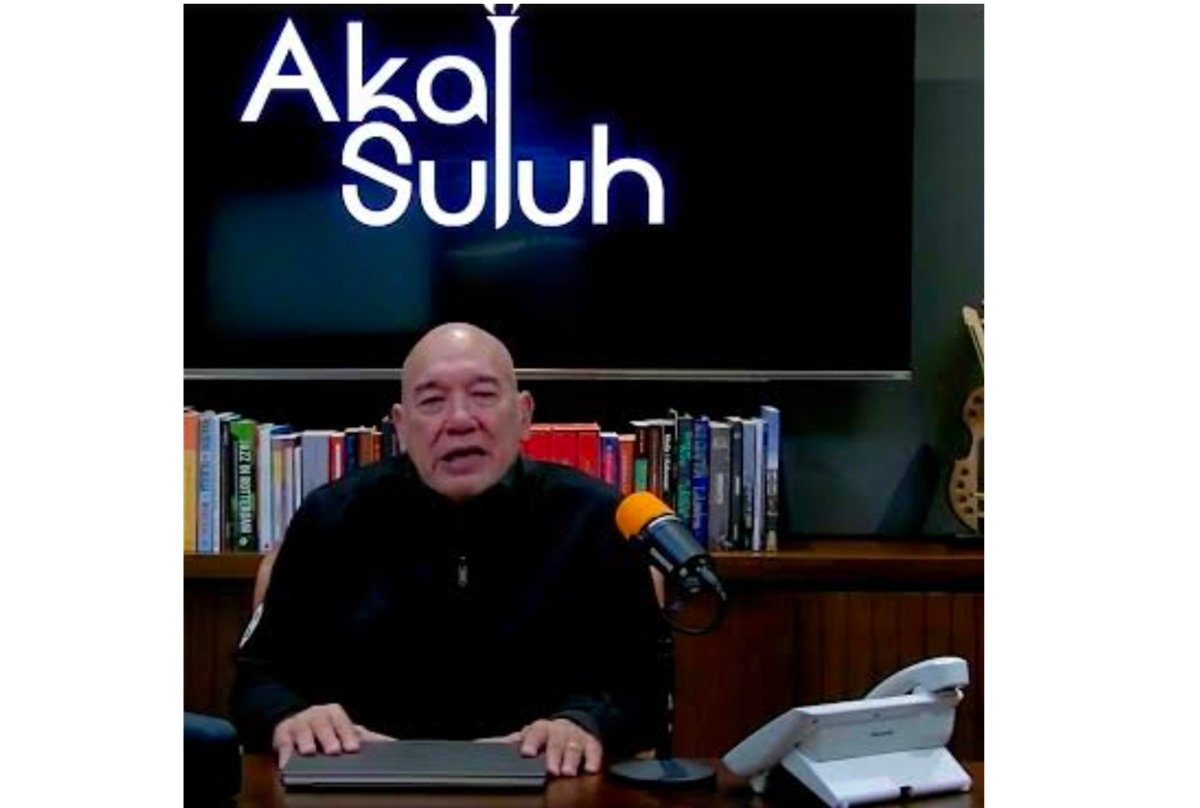
No longer standing under the bright lights of television studios he once helped build, such as Indonesia’s early private broadcasters, Gontha now appears in a quieter, almost contemplative space: AkalSuluh.
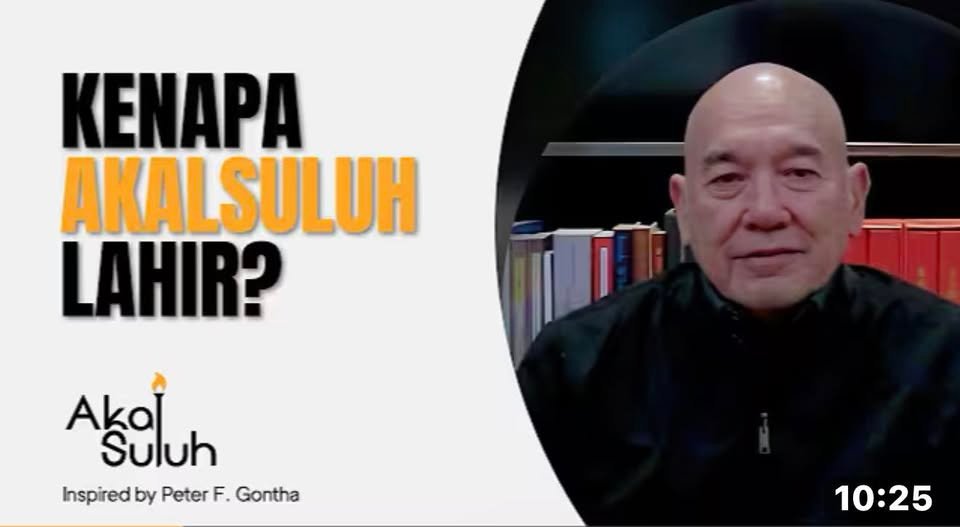
More than just another digital channel, AkalSuluh is conceived as a pause — a deliberate attempt to restore meaning to conversation.
“We are too quick to form opinions, and too slow to understand,” Gontha said in a recent interview, his tone measured, reflective of someone who has watched cycles of public discourse repeat over decades.
Moving Against the Algorithm
AkalSuluh did not emerge overnight. It is the product of a long unease shaped by Gontha’s experience at the center of Indonesia’s media and business landscape.
“In the past, the challenge was how to make people watch. Today, the challenge is how to make people stop for a moment,” he said.
At a time when algorithms reward speed, outrage and virality, AkalSuluh moves in the opposite direction — slow, deliberate and non-reactive.
Gontha argues that much of today’s public discourse has lost its grounding. Conversations, he notes, are often driven by the need to win rather than to understand. Context is sacrificed for immediacy.
Through AkalSuluh, he seeks to restore what he calls the dignity of dialogue.
Beyond Podcasting: A Curation of Thought
Gontha resists labeling AkalSuluh as a podcast in the conventional sense. He prefers to describe it as a “curation of thought.”
Topics are not dictated by trends. Political discussions aim to unpack policy rather than amplify conflict. Economic issues are explored to find rational footing, not short-term excitement.
The platform also embraces subjects often considered peripheral — music, culture, even sports — positioning them as integral to a broader intellectual ecosystem.
This perspective reflects Gontha’s own background. Beyond being a businessman and former Indonesian ambassador to Poland, he is also the driving force behind the Java Jazz Festival, one of the world’s largest jazz events.
“Music is also a way of thinking,” he said. “It teaches harmony, not domination.”
A Long Journey Toward Simplicity
Gontha’s career spans continents and industries — from working on cruise ships to building a global finance career with multinational firms, and later helping shape Indonesia’s private television industry. He has also held roles in diplomacy and state-owned enterprises, including the national airline sector.
Yet after decades in high-profile arenas, he has chosen one of the simplest mediums: conversation.
“The more experience you have, the more you realize how little you actually know,” he said.
Popular Without Sensation
Despite its restrained approach, AkalSuluh has begun to attract public attention. On some platforms, content related to it has ranked among the most-read, surpassing more sensational political and economic topics.
Gontha, however, downplays the significance.
“It’s only a small indicator,” he said. “What matters is not whether it is crowded, but whether someone gains clarity.”
In the digital age, popularity rarely correlates with depth. Yet AkalSuluh appears to resonate precisely because it offers something increasingly rare: clarity over noise.
A Deliberate Resistance
Ultimately, AkalSuluh is less a media product than a stance.
A stance against haste. A commitment to listening before speaking. And perhaps, a quiet insistence that reason still has a place in the public sphere.
“If we stop thinking,” Gontha said softly, “we stop becoming a mature nation.”
In an era where attention is currency, AkalSuluh demands something far more valuable: the willingness to think.

- Open the Gojek app and choose GoPay Transfer.
- Enter the number 0816-1945-288 and the amount shown above.
- Add your name as a note (optional) and complete the transfer.