.Banjarmasin. — A law dean in South Kalimantan has voiced support for keeping the National Police (Polri) directly under the President, amid renewed debate over proposals to place the institution under a ministry.
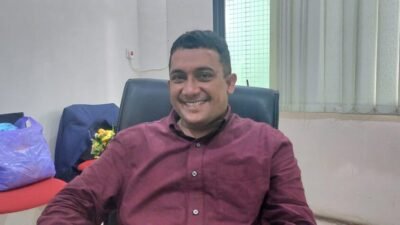
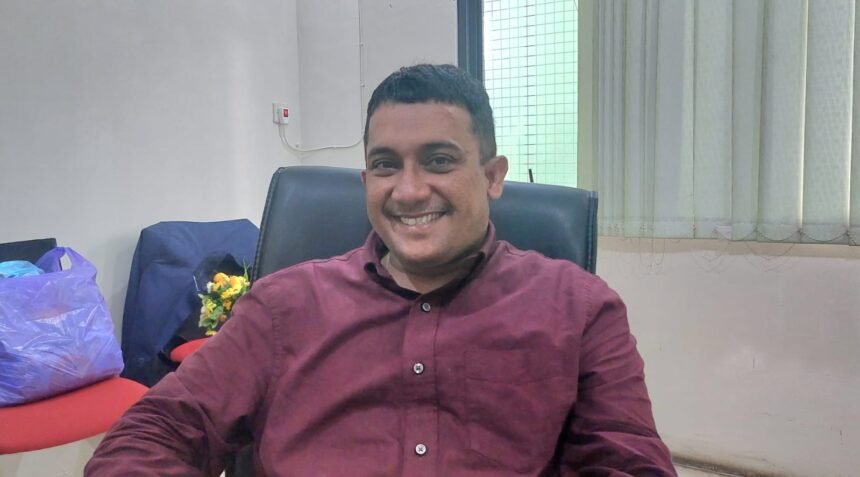
Dr. Afif Khalid, dean of the Faculty of Law at Universitas Islam Kalimantan Muhammad Arsyad Al Banjari (UNISKA MAB) in Banjarmasin, said law enforcement agencies should remain accountable to the President to ensure institutional independence and clear lines of responsibility.
“In principle, law enforcement bodies should report directly to the President, as is the case with the Corruption Eradication Commission (KPK) and the Attorney General’s Office,” Afif said on Tuesday. “This arrangement allows for direct accountability without bureaucratic interference.”
He warned that placing the police under a ministry could open the door to political intervention.
“If the police were subordinated to a ministry, there is a risk of institutional interference. We strongly support Polri remaining under the President,” he said, while stressing the need for greater professionalism and transparency in law enforcement.
“We hope that going forward the police will become more professional and transparent in enforcing the law,” Afif added.
Afif also expressed support for National Police chief Gen. Listyo Sigit Prabowo, who recently rejected the idea of placing Polri under a ministry during a working meeting with House of Representatives Commission III at the парламент complex in Central Jakarta on Jan. 26.
According to Afif, Law No. 2/2002 on the National Police substantively positions Polri as an independent state institution responsible directly to the President.
“It would be inappropriate to place Polri under a ministry. The Police Chief’s statement is in line with good governance principles,” he said.
The debate over Polri’s institutional placement has resurfaced in recent weeks, with some arguing that placing the force under a ministry could improve administrative efficiency and coordination. However, others maintain that the current structure is part of the post-Reformasi security sector design.
A similar view was expressed by Regional Representatives Council (DPD) member Muhammad Hidayattollah, also known as Dayat El, who said Polri’s position under the President was constitutionally grounded.
“A direct chain of command from the President is essential to maintain clarity in control and to ensure national security stability,” Dayat said in a statement on Tuesday.
The senator argued that Polri’s role was not merely technical but strategic, involving the maintenance of public order and law enforcement at the national level. For that reason, urgent decisions required a streamlined bureaucratic process without additional ministerial layers.
He dismissed concerns that placing Polri under the President weakened oversight mechanisms, saying checks and balances remained intact through parliamentary supervision and public participation.
“The main issue is not where Polri is structurally placed, but how the institution is encouraged to become professional, modern and humane,” Dayat said, adding that public trust should be the key benchmark in institutional reform.
He urged that discussions on Polri’s status should not be driven by short-term political considerations but by long-term national interests.
As a member of the DPD overseeing political, legal and security affairs, Dayat said he would continue to monitor efforts to strengthen state institutions to safeguard the integrity of the unitary state