Indonesiantalk.com –– Diplomatic Signals Between Jakarta, London and Davos
By Dr. Eko Wahyuanto
The world today is far from a stable and peaceful order. It is a grey landscape of uncertainty, where nations increasingly clash to defend prestige, interests and influence.
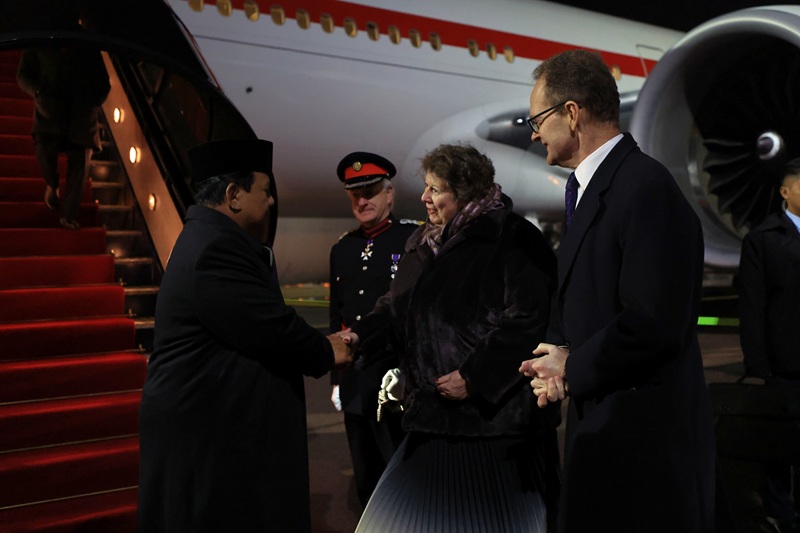
It is against this backdrop that President Prabowo Subianto’s visit to London and Switzerland should be read not as routine diplomacy, but as a carefully calibrated signal: Indonesia is asserting itself as a sovereign nation, confident in its choices and unwilling to be dictated to.
The trip underscores Jakarta’s long-standing principle of strategic autonomy. Indonesia is neither tilting left toward Beijing nor leaning too far right toward Washington. Instead, it is standing upright, charting its own course in an increasingly polarized world.
At a time when the United States is flexing protectionist muscle through tariffs and tighter trade policies, Jakarta has chosen to look toward Europe. The symbolism is clear, firm yet elegant. If one door in the Pacific narrows due to tariff disputes, other doors remain open across the Atlantic and in the Alps.
President Prabowo appears to be practicing a contemporary version of active non-alignment. This is diplomacy of caliber and calculation. Indonesia is no longer content to be a passive object in global power games; it seeks to act as a subject that shapes its own strategic destiny.
By engaging the United Kingdom and Switzerland, Indonesia is repositioning itself as a credible middle power with the confidence to engage G7 countries on equal footing. This is not an act of defiance, but a measured message to the international community: Indonesia is not a follower waiting for favorable treatment from others.
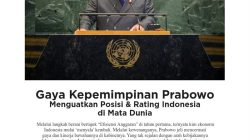
Prabowo’s presence in Davos, particularly after nearly a decade of absence by Indonesian leaders, is also a strategic move to rebuild global confidence. The opportunity is even greater if Indonesia can frame Danantara as a new instrument of economic diplomacy, blending state capacity with market pragmatism.
Tariff negotiations often place developing countries like Indonesia in a difficult position. By strengthening ties with the UK and Switzerland as hubs of finance, technology and global economic diplomacy, President Prabowo appears to be constructing a strategic buffer.
This serves as a counterbalance, signaling that Indonesia has bargaining power in international negotiations. The country possesses natural resources, a vast domestic market and, crucially, the confidence of a sovereign nation.
Should Washington choose to play the tariff card, Indonesia may already have secured green investment and technological cooperation from the UK, alongside access to capital from Switzerland. In business terms, it is a classic principle: never put all your eggs in one basket.
US President Donald Trump himself has previously expressed personal appreciation for Prabowo’s diplomatic style. Through his Truth Social platform, Trump described Prabowo as a “great” and “highly respected” leader, viewing Indonesia as a “tough but fair” negotiating partner. From Trump’s perspective, a reduction in tariffs from 32 percent to 19 percent would constitute a win-win outcome.
The United Kingdom, for Indonesia, is more than the face of an old monarchy. London represents a gateway to military modernization and higher education, opening possibilities for technology transfer that have long proven elusive elsewhere.
Switzerland, meanwhile, offers a different stage. At Davos, President Prabowo can market one of Indonesia’s most valuable assets: stability. In a world increasingly defined by conflict and volatility, stability has become a luxury commodity.
Indonesia can offer this stability to partners like the UK and Switzerland, positioning itself as a reliable anchor in the Indo-Pacific, one of the world’s most dynamic regions. The relationship is symbiotic. Indonesia needs capital and technology; European partners need security, access and dependable growth prospects.
The visit reinforces Indonesia’s determination not to rely on a single power pole, whether the United States or China. Diversifying partnerships with countries like the UK and Switzerland strengthens Indonesia’s bargaining position and opens alternative markets, particularly in Europe, should Pacific trade flows weaken.
Global threats such as supply-chain disruptions and energy inflation continue to haunt nations worldwide, including Indonesia. President Prabowo appears acutely aware of the logic of survival in international politics.
Cooperation across sectors with the UK, alongside vocational and economic learning from Switzerland, reflects a philosophy of self-reliance. Indonesia can learn from Switzerland’s ability to maintain economic resilience despite being surrounded by larger powers, and from Britain’s capacity to retain global influence even after Brexit.
Prabowo’s steps in London and Davos also send a quiet but firm message to Washington. Indonesia is ready to partner, ready to negotiate tariffs, but not from a position of submission.
Like a pendekar, Prabowo projects respect and friendship toward all, while remaining firmly grounded should economic sovereignty be challenged.
The world may be unsettled, but Indonesia is ensuring that it stands upright, sovereign and far from being a pawn on someone else’s chessboard. This is diplomacy in the big leagues: bold, tactical and firmly rooted in national interest.
-
Dr. Eko Wahyuanto is a public policy analyst.