IndonesianTalk.com — Maraden Panggabean: The Batak General Who Fought for Indonesia’s Independence and Unity
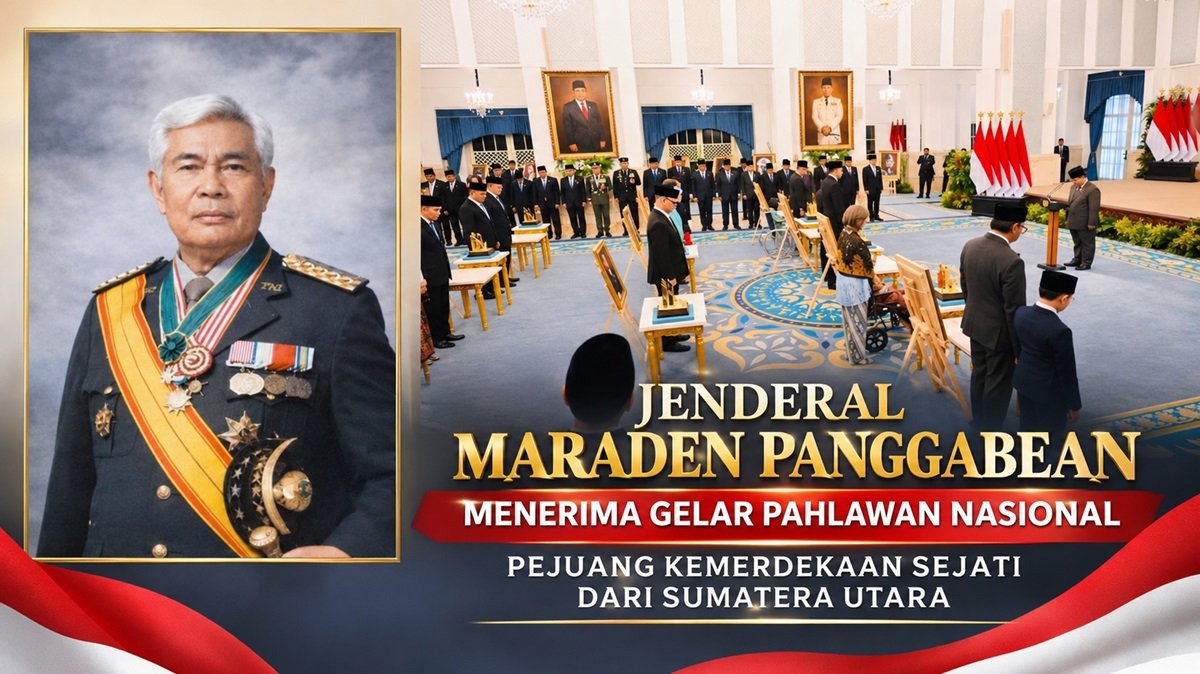
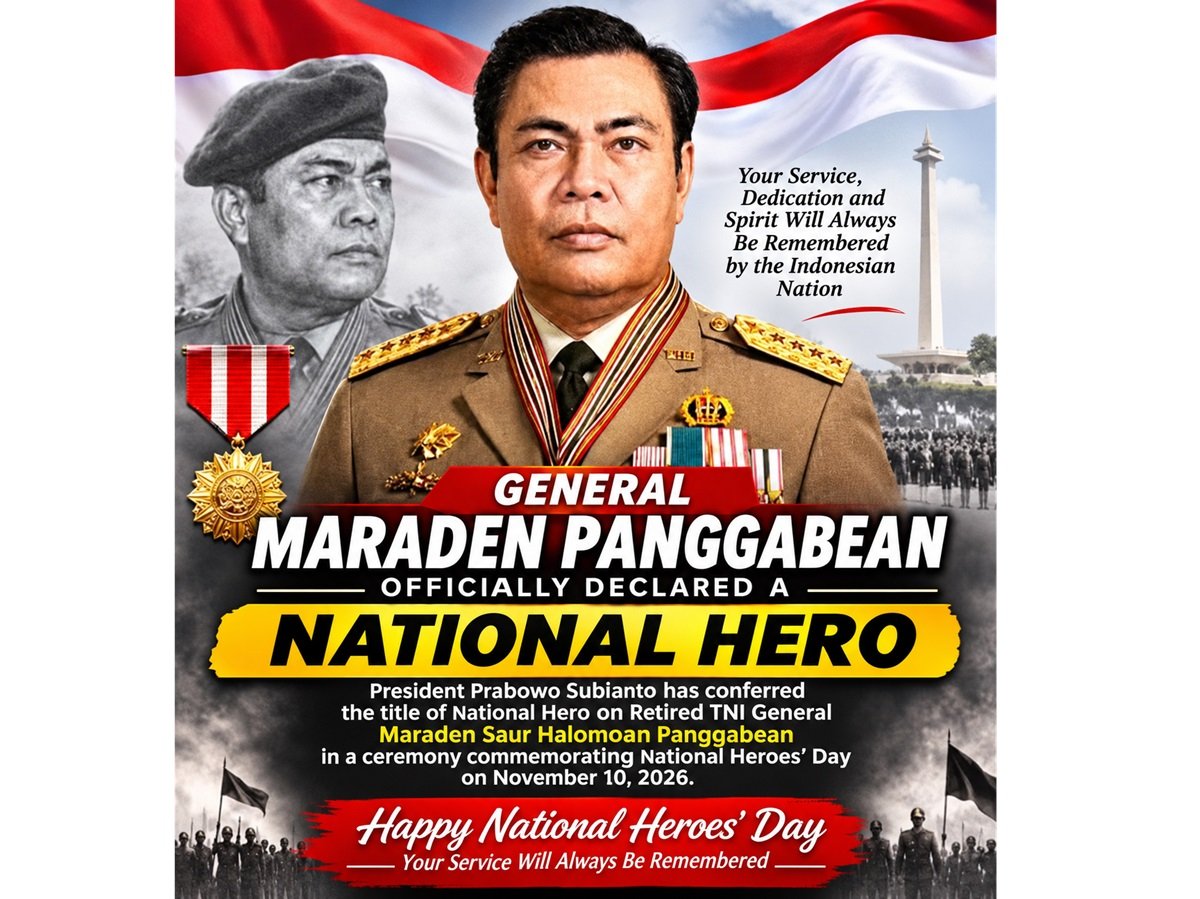
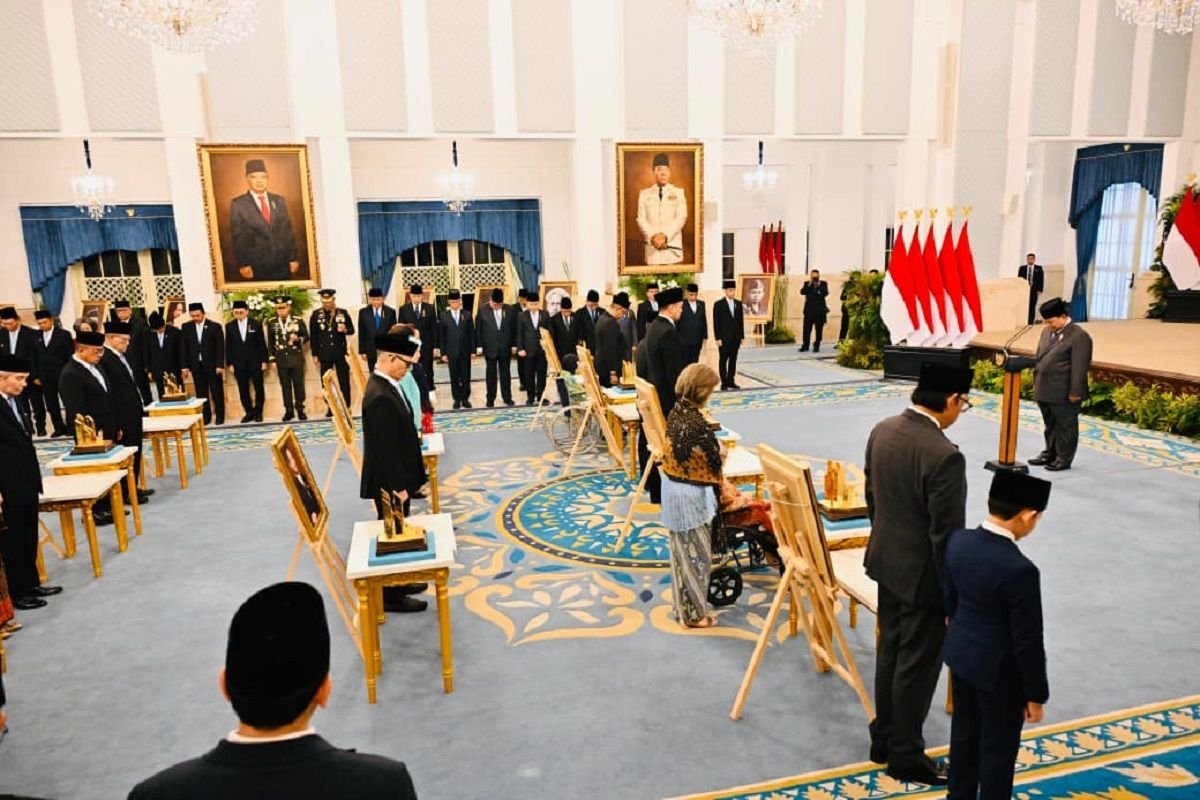
A former elementary school teacher from North Sumatra, Maraden Panggabean rose through the military ranks to become one of Indonesia’s most influential generals and statesmen. His contributions to the republic have now been recognized with the title of National Hero.
Indonesia has long recognized many of its national heroes from Java. But the country’s struggle for independence was fought across the archipelago, including the forests and rugged terrain of North Sumatra, where one of the republic’s determined defenders emerged: General Maraden Panggabean.
Born on June 29, 1922, in Pansur Napitu, Tapanuli, North Sumatra, Maraden was the son of Patuan Natoras Marhusa Panggabean and Katharina boru Panjaitan. His journey from a village schoolteacher to the highest ranks of the Indonesian military reflects a lifetime of service to the nation.
Before taking up arms, Maraden held a piece of chalk. He worked as an elementary school teacher and later became head of the Schakelschool in Tarutung. In 1943, when the Japanese occupation authorities established military training through the PETA (Defenders of the Homeland) program, he left teaching and entered military service.
That decision would define the rest of his life.
Fighting the Dutch in the forests of Sumatra
During Indonesia’s physical revolution of 1945–1949, North Sumatra became an important theater of resistance against Dutch attempts to re-establish colonial rule.
Maraden served in several military positions, including commander of Pesindo forces, military instructor in Sibolga in 1945, chief of staff of BN I, Regiment IV, Division X in Sumatra from 1945 to 1949, and commander of Battalion 104/Waringin, Brigade BB, Territory I/Bukit Barisan from 1949 to 1952.
His forces fought Dutch troops during the First and Second Dutch Military Aggressions, operating in the forests and difficult terrain of Tapanuli, Sibolga and Tarutung.
The scale of the military imbalance was considerable.
The Dutch campaign was led by Lieutenant General Simon Hendrik Spoor, commander-in-chief of the Netherlands East Indies armed forces from 1946 to 1949. Spoor was the architect of two major military offensives: Operation Product, launched on July 21, 1947, and Operation Kraai, which began on December 19, 1948.
The Dutch deployed a substantial military force, supported by aircraft, tanks and warships. Their objectives included crushing the young Indonesian Republic, capturing President Sukarno and Vice President Mohammad Hatta, and taking control of Yogyakarta, the republic’s capital at the time.
On paper, the Indonesian forces faced overwhelming odds.
Yet the Dutch military superiority did not succeed in extinguishing the resistance. Guerrilla warfare, supported by local communities, continued across the archipelago.
While Dutch forces attacked Yogyakarta, Maraden and his men fought in the forests of North Sumatra, sustaining the republic’s resistance far from the political center of the revolution.
The controversy surrounding General Spoor’s death
There are two accounts concerning the death of General Spoor.
The official historical account recorded by Dutch and Indonesian sources states that Spoor died suddenly in Jakarta on May 25, 1949, reportedly of a heart attack. He was buried at Menteng Pulo Cemetery.
However, another account has circulated among former fighters and communities in Tapanuli.
According to testimony cited in Bedjo’s 1985 book, Harimau Sumatera dalam Perang Kemerdekaan, and a report published in the Dutch newspaper Fries Koerier on April 24, 1969, Spoor was allegedly shot during an ambush on a Dutch military convoy along the Sibolga–Tarutung road in Central Tapanuli.
The ambush was reportedly carried out by troops under Maraden Panggabean’s command. A former KNIL soldier named Tumanggor was said to have told Major Bedjo that he had escorted Spoor during an ambush between Aek Maranti and Sibolga.
This alternative account, however, has not been substantiated by official autopsy records or conclusive documentary evidence. It should therefore be treated as an unverified historical testimony rather than an established fact.
Regardless of which account is correct, Maraden’s role in sustaining resistance in North Sumatra remains an important part of Indonesia’s revolutionary history.
Defending the republic against internal rebellions
Indonesia’s independence in 1949 did not immediately bring stability. The newly established republic faced another serious challenge: armed rebellions threatening national unity.
One of the most significant was the Darul Islam/Indonesian Islamic Army (DI/TII) movement, which sought to replace Pancasila with an Islamic state known as Negara Islam Indonesia.
The movement was proclaimed by Sekarmadji Maridjan Kartosoewirjo in West Java on August 7, 1949. It subsequently spread to other regions, including Aceh under Daud Beureueh, Central Java under Amir Fatah, South Kalimantan under Ibnu Hadjar and South Sulawesi under Kahar Muzakkar.
The rebellion led by Kahar Muzakkar became one of the longest-running and most difficult conflicts.
A former independence fighter and lieutenant colonel in the Indonesian military, Kahar became dissatisfied after the government rejected his demand that all members of the South Sulawesi Guerrilla Force (KGSS) be accepted into the Armed Forces of the Republic of the United States of Indonesia (APRIS) without selection.
On August 17, 1951, he took his forces into the forests. Two years later, on August 7, 1953, he formally aligned himself with Kartosoewirjo’s Islamic State movement.
The conflict continued for approximately 15 years, from 1950 to 1965.
During this turbulent period, Maraden was among the military officers entrusted with safeguarding the territorial integrity of the republic. His career involved operational and command responsibilities as the armed forces confronted rebellions in several parts of the country.
The experience was fundamentally different from fighting the Dutch.
Against the colonial army, the enemy was clearly defined. In the DI/TII conflict, Indonesian soldiers were fighting former comrades in arms, many of whom had also participated in the struggle for independence.
Kahar Muzakkar was eventually killed on February 3, 1965, during Operation Tumpas, led by General M. Jusuf, near the Lasolo River in Southeast Sulawesi.
The end of the rebellion marked an important moment in the consolidation of the Indonesian state. Maraden belonged to the generation of military leaders who helped preserve the republic through both its independence struggle and its subsequent internal conflicts.
Architect of a modern Indonesian military
Maraden’s contribution to Indonesia extended well beyond the battlefield.
He held some of the most important positions in the country’s military and government, including the eighth Army Chief of Staff from 1968 to 1969, Army Commander in 1969, commander of the Operational Command for the Restoration of Security and Order (Kopkamtib) from 1969 to 1971, and minister of defense and security from 1971 to 1978.
He subsequently became the sixth commander of the Armed Forces of the Republic of Indonesia (ABRI), serving from 1973 to 1978.
His tenure coincided with a sensitive period in Indonesian political history, following the events of 1965 and the transition to the New Order government.
One of his major contributions was promoting military modernization and professional standards among the armed forces.
Maraden pursued military education in the United States, including the Infantry Officer Advanced Course in 1957, and attended the Indonesian Army Command and General Staff College (Seskoad).
He believed that military professionalism was essential to the strength of the republic.
One of his often-quoted principles captured his concern about military involvement in commercial activities: “A soldier who does business while on duty may end up selling his weapons when war comes.”
The statement reflected his belief that the military should remain focused on its primary responsibility: defending the country.
His military career also included an important role in the campaign to recover West Irian (now Papua) and the implementation of President Sukarno’s Dwikora policy during the confrontation with Malaysia.
In his book The Fighting General, author Tom Pocock portrayed Maraden as an experienced strategist whose military skills and leadership contributed significantly to the consolidation of the Indonesian Republic.
Pocock also highlighted his role in planning military operations along the North Kalimantan border during the Dwikora period.
From military commander to statesman
Maraden’s public service did not end when he retired from active military duty.
He became Indonesia’s first coordinating minister for political and security affairs, serving from 1978 to 1983, before being appointed chairman of the Supreme Advisory Council (DPA), a position he held from 1983 to 1993.
As chairman of the DPA, he served as one of the country’s senior presidential advisers.
He was also active in Golkar, including serving as chairman of its Board of Trustees, while his military legacy remained associated with the development of ABRI’s institutional role.
His service was recognized through numerous national and international decorations, including the Star of the Republic of Indonesia Adipradana, the Star of Mahaputera Adipradana and the Star of Dharma.
International honors included the United States Legion of Merit, the Philippines’ Order of Sikatuna, and recognition from Germany, the Netherlands, Belgium and Malaysia.
Integrity, simplicity and his Batak roots
For Maraden, leadership was not simply about rank, power or military achievement. His legacy was also shaped by personal integrity, financial discipline and a strong connection to his cultural roots.
He was known for his emphasis on responsible public spending, particularly when managing the defense budget.
“Military funds also come from the money of ordinary people who are struggling. Use them carefully, as if you were spending your own mother’s money,” he once said.
The principle reflected his belief that public resources must be treated with respect and accountability.
His connection to Batak culture remained equally strong throughout his career.
He served as an adviser to the Batak Cultural and Customary Deliberation Institution (LPAKB) and supported the Bina Bona Pasogit Foundation, which he helped establish in 1989 to assist communities affected by the earthquake in Tarutung.
Despite being fluent in Dutch and English, Maraden remained deeply attached to his mother tongue.
He once remarked that he felt most at peace when praying in the Batak language.
His life demonstrated that national identity and local cultural heritage need not be in conflict. For Maraden, being Indonesian did not mean abandoning his Batak identity.
At the 150th anniversary celebration of the Batak Protestant Christian Church (HKBP) in 2011, then-President Susilo Bambang Yudhoyono described Maraden as an important national fighter and a prominent military figure who had served as deputy commander of Mandala during the campaign to return West Irian to Indonesia.
A legacy beyond military rank
Maraden Panggabean’s life represented a remarkable journey: from a village schoolteacher in North Sumatra to a four-star general, defense minister, commander of ABRI and senior statesman.
He served the republic for approximately 35 years, from his entry into the PETA military training program in 1943 until his retirement as commander of ABRI in 1978.
His journey encompassed the struggle against Dutch colonial rule, the preservation of national unity, military modernization and public service at the highest levels of government.
He was awarded the Guerrilla Star, one of Indonesia’s important decorations for independence-era fighters, and was entitled to burial at the Kalibata National Heroes Cemetery in Jakarta.
Maraden died on May 28, 2000, and was laid to rest there with full military honors.
His recognition as a National Hero is therefore more than a tribute to a distinguished military career. It acknowledges a generation that helped establish, defend and consolidate the Indonesian Republic.
From the forests of Tapanuli to the highest command of the armed forces, Maraden Panggabean’s story is ultimately one of service: from his homeland to Indonesia, and from the people to the nation.
Horas.