IndonesianTalk.com — Yusran Hadromi and a Diplomatic Career Measured by Legacy
JAKARTA — A diplomat’s career is often measured by the positions he or she has held: secretary, counselor, chargé d’affaires or ambassador. Others are remembered for treaties signed, negotiations concluded or crises successfully navigated.
Yusran Hadromi appears to measure his career differently.
After three decades in the diplomatic service, the 29 August 1969-born diplomat says what matters most is not necessarily reaching the highest position, but leaving a legacy — through ideas, relationships and initiatives that continue to have an impact after an assignment ends.
“More toward legacy and ideas,” is how Yusran describes his approach to his long career.
Positions change. Countries of assignment change. Offices are eventually handed over to someone else. What remains, he believes, is the footprint left behind.
That footprint does not always come in the form of major diplomatic agreements.
Sometimes it is an Indonesian product finding its way onto supermarket shelves overseas. Sometimes it is an Indonesian landmark recreated in a public space abroad. Sometimes it is a relationship cultivated over years that eventually translates into political support.
And sometimes, diplomacy is simply an Indonesian citizen in difficulty finding a representative of their country willing to be present.
For Yusran, those moments are part of what diplomacy is about.
From economics to diplomacy
Yusran graduated with a bachelor’s degree in economics, majoring in management, from Universitas Pancasila in 1991. Before entering the diplomatic service, he worked in the private sector, including at PT Balisani and Jaya Bank.
His diplomatic career began to take shape after he attended the Foreign Service School in 1996. He later completed the Foreign Service Staff School in 2006 and the Foreign Ministry’s Staff and Leadership School in 2014.
His assignments subsequently covered consular, economic, political and protocol affairs, as well as the management of Indonesian diplomatic missions.
He served in Singapore, Prague, Kyiv and Islamabad before continuing his career in Paris.
On paper, the trajectory resembles that of many Indonesian diplomats. But across those assignments, one pattern stands out: Yusran consistently looked for something that could outlast his posting.
Prague: opening doors for Indonesian business
Prague became an important chapter in Yusran’s career.
From 2006 to 2010, he handled consular and economic affairs at the Indonesian Embassy in the Czech capital. The experience taught him that economic diplomacy was not simply about attending business forums or promoting Indonesian products at exhibitions.
It was about opening doors.
One such effort involved creating market access for Indonesian products in the Czech Republic.
Indomie became one of the most visible examples. Following a business meeting between a Czech food and beverage distributor and PT Indofood Sukses Makmur facilitated by the Indonesian Embassy in Prague, negotiations continued until ND Impex was appointed the official distributor of Indomie in the Czech market.
In September 2009, the first container of Indomie arrived in the Czech Republic. A month later, several varieties began appearing in local retail networks.
But for Yusran, the work did not end with the arrival of the product.
The embassy helped introduce the products to consumers, identify promotional opportunities, connect distributors with businesses and build awareness around Indonesian brands.
Similar approaches were applied to products including Gingerbon, Bontea and Hemaviton.
The diplomat’s role, in this context, went beyond representing the state. He became a market opener and a business facilitator.
Diplomacy also means learning from setbacks
Not every initiative produced a visible success.
In Prague, Yusran was involved in efforts to explore Czech technology and investment for the revitalization of Indonesia’s sugar industry. Several Czech companies were introduced to Indonesian partners, with investment discussions reportedly reaching around US$100 million.
But the sugar industry proved more complicated than bringing in technology and capital.
Land availability, sugarcane supply, yields, financing and government policy presented structural challenges.
The initiative did not immediately deliver sugar self-sufficiency.
For Yusran, however, that did not necessarily represent a failure of diplomacy.
It demonstrated a basic limitation: diplomacy can open a door, but it cannot substitute for the commercial viability of a project.
Technology without raw materials is insufficient. Investors without a viable business model are insufficient. Agreements without a supporting ecosystem are insufficient.
A similar lesson emerged from efforts involving Czech companies in the development of Kulon Progo International Airport. The companies explored aviation technology while the embassy worked to connect businesses, local authorities, investors and Indonesian stakeholders.
The airport eventually became Yogyakarta International Airport and was inaugurated in 2020.
Diplomats who open doors are not always present when the building is finally completed.
But the doors they open can influence what happens next.
Kyiv: bringing Indonesia into public spaces
If Prague was about opening economic doors, Kyiv was about making Indonesia visible.
From 2015 to 2018, Yusran served in political affairs at the Indonesian Embassy in Kyiv and later became chargé d’affaires ad interim.
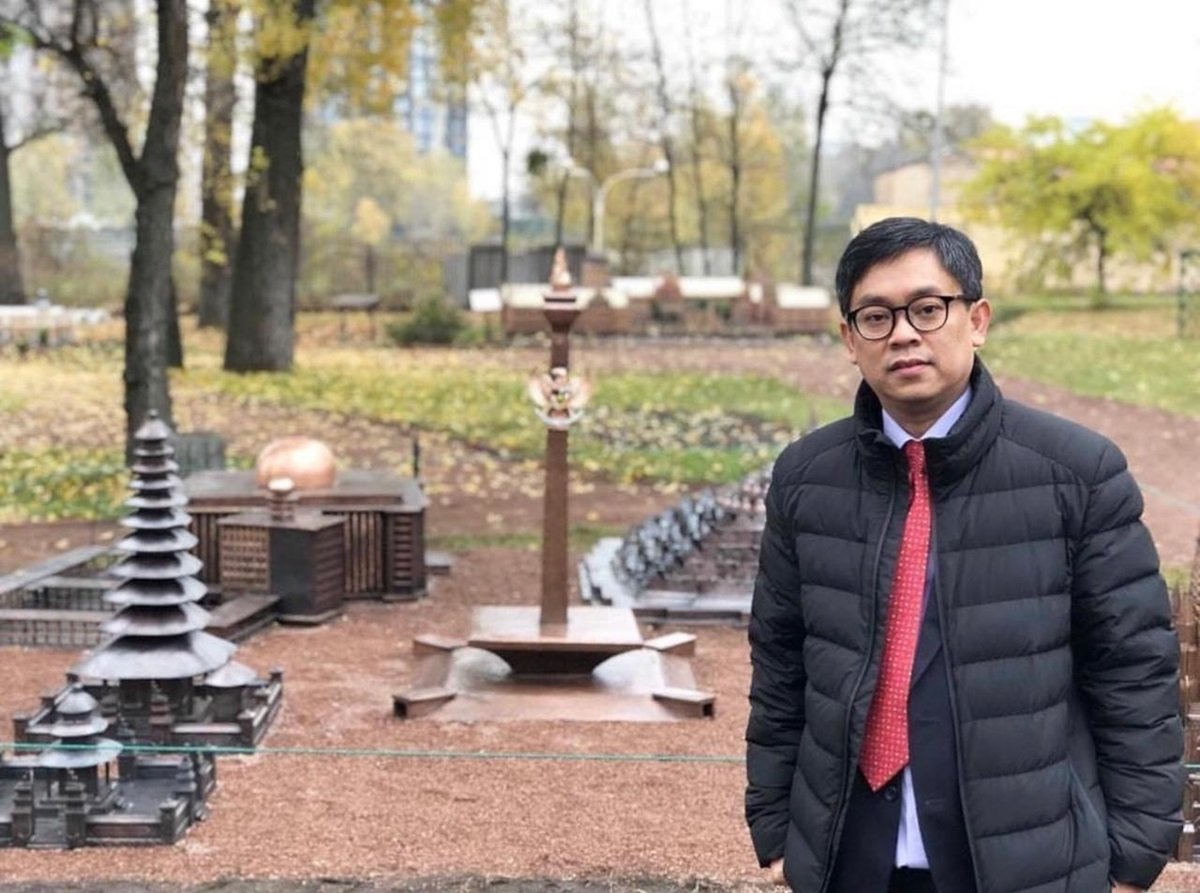
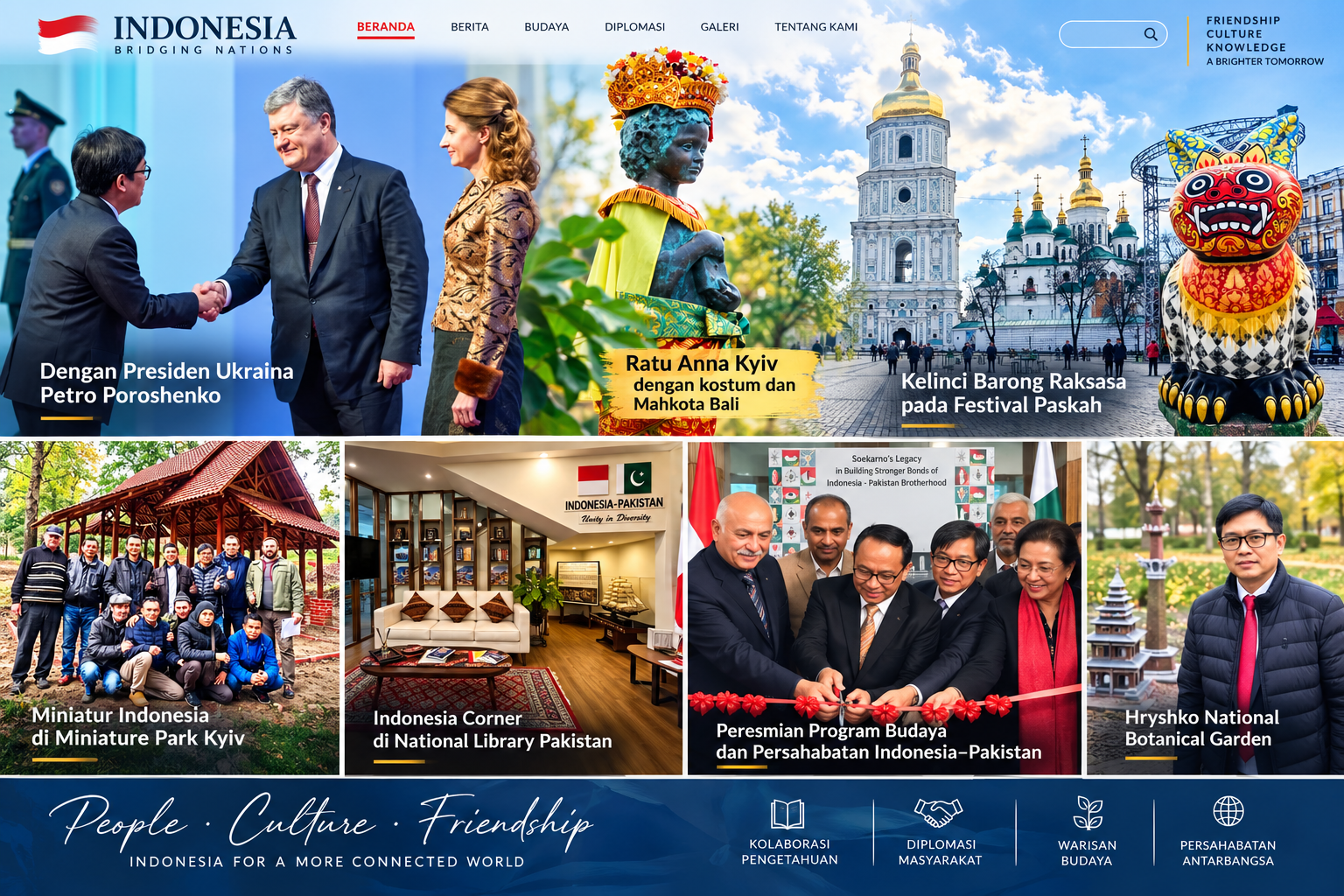
One of the initiatives involved Ukraine in Miniature, a public park featuring miniature landmarks from different countries.
Through the embassy, Indonesian landmarks including Borobudur, Istiqlal Mosque, Jakarta Cathedral, Ulun Danu Bratan Temple and the National Monument, or Monas, were represented in miniature.
The significance was not merely architectural.
The miniatures were placed in a public space rather than inside the embassy or at a diplomatic event.
The idea was simple: if Ukrainians were not traveling to Indonesia, Indonesia could travel to them.
The same approach was reflected in efforts involving murals in Kyiv and Indonesia’s participation in local cultural festivals.
At one Easter festival near St. Sophia, for example, a giant rabbit was decorated with Balinese Barong motifs.
The result was a meeting of two cultural symbols in a public space — something ordinary visitors could see, photograph and discuss.
Indonesia was being introduced without requiring an event formally branded as an Indonesian promotion.
Diplomacy through people-to-people ties
Yusran’s work in Kyiv also reflected another dimension of diplomacy: people-to-people relations.
Marina Barabash, a Ukrainian Darmasiswa alumna who later worked at the Indonesian Embassy, was involved in translating Indonesian children’s stories into Ukrainian.
There were also efforts to encourage Ukrainians to participate in Indonesia’s arts and culture scholarship programs.
The approach reflected the belief that diplomacy does not occur only between governments.
It can take place between a student and a university, an artist and an audience, an entrepreneur and a business partner, or a visitor and an Indonesian cultural display.
Those small encounters can gradually shape perceptions of a country.
Yusran was also involved in lobbying Georgia and Armenia for support for Indonesia’s bid for a nonpermanent seat on the United Nations Security Council for the 2019–2020 term.
Both countries subsequently conveyed their support through diplomatic notes.
As chargé d’affaires, he also facilitated Ukrainian President Petro Poroshenko’s visit to Indonesia, which resulted in several agreements.
Diplomacy, in such cases, does not always begin at a formal negotiating table.
Sometimes it starts with a conversation, an idea or simply the willingness to knock on a door.
Islamabad: building Indonesia’s house abroad
Yusran’s next assignment in Islamabad presented a different challenge.
From 2022 to 2024, he handled protocol and consular affairs and served as head of the chancery at the Indonesian Embassy in Islamabad.
Here, legacy involved improving the Indonesian diplomatic mission itself.
As head of the chancery, he dealt with matters that rarely attract public attention: buildings, archives, consular facilities, security and internal administration.
Three new buildings were established during the two-year period: a consular building, an archive building and a guest house. Several other facilities were also renovated.
For Yusran, however, buildings were more than physical infrastructure.
The embassy’s facade was, in a sense, the face of Indonesia.
The mission also developed an Indonesian Corner at the National Book Foundation in Islamabad and proposed an Indonesian Park on more than 5,000 square meters of land.
Cultural diplomacy thus operated alongside economic and political diplomacy.
Exhibitions introduced Indonesia to Pakistani audiences, including an exhibition on Sukarno and the book Indonesia Spice Up Pakistan.
When diplomacy becomes personal
Islamabad also brought Yusran into one of the most sensitive dimensions of diplomatic work: protecting Indonesian citizens.
The cases included mixed marriages, domestic violence, overstaying and immigration documentation.
In such situations, diplomacy was no longer about investment or international agreements.
It was about vulnerable people.
Preventive approaches were therefore developed through public outreach and the Warung Konsuler initiative.
The principle was straightforward: the state should not only appear after a problem has occurred. It should also try to prevent problems from becoming more serious.
That principle would become even more significant in Paris.
Paris: diplomacy through empathy
Since 2024, Yusran has served in protocol and consular affairs at the Indonesian Embassy in Paris.
France receives millions of tourists, including Indonesians. It is also home to Indonesian workers and citizens facing a wide range of difficulties.
Some cases involve theft or lost belongings. Others concern travel documents.
But some problems cannot be resolved with paperwork alone.
Among the experiences that left an impression on Yusran were cases involving Indonesians experiencing mental health difficulties.
Over roughly a year, he visited hospitals several times to meet three Indonesian citizens.
His approach was not to lecture them.
He listened, sought to create a sense of safety and offered respect and empathy.
At that point, consular diplomacy became intensely human.
Sometimes the state is represented by a passport.
Sometimes by an emergency travel document.
And sometimes by a person willing to sit down, listen and accompany a citizen through a difficult period.
Protecting Indonesia’s cultural heritage
Paris also brought Yusran into the protection of Indonesia’s cultural heritage.
The case of a Nias statue in France became one example.
The Indonesian Embassy in Paris submitted supporting evidence to French authorities to strengthen the statue’s Indonesian origin and cultural heritage status.
The legal process continued through the relevant French authorities, while coordination and communication were maintained in an effort to secure the object’s return to Indonesia.
Here, diplomacy took yet another form.
It was no longer about opening a market or creating a public cultural attraction.
It was about ensuring that an object carrying part of Indonesia’s history was not simply lost overseas.
Four cities, one thread
Prague, Kyiv, Islamabad and Paris offered very different diplomatic experiences.
Prague was about opening economic doors.
Kyiv was about making Indonesia visible.
Islamabad was about building the Indonesian house abroad while protecting Indonesian citizens.
Paris demonstrated that diplomacy ultimately comes down to people.
Across all four assignments, however, one thread remains.
Yusran tends to see possibilities.
A product becomes a potential market.
A local festival becomes a potential platform for Indonesia.
A Darmasiswa alumnus becomes a potential cultural bridge.
An embassy building becomes a representation of Indonesia.
A citizen in difficulty becomes a responsibility of the state.
And an Indonesian artifact abroad becomes something worth fighting to recover.
A legacy that does not always take the form of monuments
Not every initiative became a lasting success.
Some remained projects or exploratory efforts. Others progressed and later stopped. Some produced measurable outcomes, while others left value mainly through relationships.
A Toyota Prado decorated with Pakistani truck-art motifs offers a simple example.
The vehicle once served as a cultural diplomacy medium, combining Indonesian icons with Pakistani visual traditions during embassy activities.
It has since been removed from the embassy’s inventory.
The physical object is gone.
But for Yusran, that does not necessarily mean the legacy has disappeared.
A vehicle can disappear. A story can remain.
Beyond the ambassadorial title
There is something revealing about Yusran’s view of his career.
He appears less interested in whether his journey culminates in an ambassadorial title than in what remains after an assignment ends.
His current position as minister counselor and acting head of protocol and consular affairs at the Indonesian Mission in Paris is only one point in a three-decade journey.
The office will eventually be occupied by someone else.
The desk will be handed over.
Telephone numbers will change.
But if a relationship survives, a program continues, an Indonesian cultural space remains or someone remembers Indonesia because of an encounter with an Indonesian diplomat, then the work has not truly ended.
That may be the most practical definition of diplomatic legacy.
Not the height of a position.
Not the number of years spent in a particular country.
But what remains alive after the diplomat has left.
Yusran Hadromi appears to have chosen that measure.
His diplomacy has often been quiet: opening doors, creating opportunities, connecting people and turning ideas into spaces for Indonesian presence.
And in some of the most difficult circumstances, it has meant turning consular duties into something more fundamental — a tangible expression of the state’s presence.
Because diplomacy, ultimately, is not only about one state meeting another.
It is about people meeting people.
And perhaps a diplomat’s legacy begins precisely when the assignment ends — when the work once done continues to create a path for others.